
 Post by
You can’t brute-force TikTok with five promos and a prayer. The system needs trust first, then it gives you reach. A TikTok account warm-up service is simply a structured process. It makes your new or dormant profile look and act like a real person before you ask for clicks. In 2026, that means 10–14 days of normal browsing, light posting, and gradual activity ramps that match human behavior.
Here’s the direct answer. Warm-up teaches TikTok who you are (topic, audience, device, and behavior) so your first sales posts don’t get buried. You’ll build clean signals, test hooks, and confirm your baseline views before a launch. Skip it and your best content won’t leave the driveway.
If you still need to set up a business profile, skim this primer: tiktok create account. For more background on structured warm-up in other verticals, this related post breaks down affiliate-specific tweaks: How to Warm Up a TikTok Account for Affiliate Marketing. I’ll tailor this guide to course creators, where link-in-bio clicks and education-first content trigger stronger scrutiny.

Why Course Creators Can't Just Start Posting Promos on a New TikTok Account
TikTok treats brand-new or dormant accounts as unproven. Your first 7–14 days shape how the For You system classifies your profile and decides who to test you with. As a course creator, you face extra friction. Your behavior nudges “commercial intent” flags: link-in-bio clicks, sales hooks, and external site mentions. That’s not bad, but it demands trust.
Specifically, TikTok weighs three early signals. It looks for device legitimacy, one account per real phone, a consistent IP, and no automation traces. It evaluates organic consumption.
It checks for normal FYP watch time in your niche instead of zero browsing. And it expects gradual activity. That ramps from light interactions to daily posts rather than a cold-start blast.
Here’s the scenario you’ve likely lived. You launch a new account. You post five sales-leaning videos on day one, and each sits at 47 views for a month.
Cold Start vs. Warm Profile
Nothing was wrong with your course. The account was ice-cold. Your content looked like an ad, and the system had no viewer graph to test you against.
Contrast that with a warmed profile. After 10–14 days of clean behavior and value-first clips, your first campaign week sees 2,000–10,000 views across early posts. Same ideas.
Same face. Better signals. You earned reach before you asked for action.
For context on how the platform’s recommendation loop works, this overview of TikTok explains how the For You feed relies on past interactions and device/account signals to route content. You’re feeding that engine during warm-up.
Warm-Up Trust Signals TikTok Cares About
TikTok wants to see a real device on a stable IP, not an emulator or a hopping VPN. It also expects normal watch behavior: spend 20–30 minutes a day viewing niche-relevant clips. Add organic actions during that window.
10–15 authentic likes or comments and 5–10 follows early on. Then ramp posting from zero to one to two per day across two weeks. Avoid any artificial engagement such as bots, pods, or paid views.
“We don’t touch campaigns until accounts pass warm-up confidence checks. Data beats shortcuts.” — course growth principle I stand by
Moreover, this is why a tiktok account warm-up service exists at all. It front-loads those trust signals so your first promo doesn’t waste a great hook on a dead start.
Also Read!
The 14-Day TikTok Warm-Up Framework for Course Creators
You’ll move through four phases. Expect 10–14 days before a clear baseline emerges. If your account is older but dormant, still run this plan. Dormancy resets trust.
Phase 1 (Days 1–3): Account Setup and Browsing Warm-Up
-
Complete your profile:
-
Bio: value statement + target audience + credibility + soft CTA.
-
Example: “Daily Excel lessons for analysts | 1-min tips | Free templates below.
-
Profile photo: your face or a clean brand mark.
-
Link: add your hub, but don’t push it yet.
-
Classification browsing (20–30 min/day):
-
Search and watch in your niche: “home workouts,” “Excel tips,” “portrait drawing,” “sales emails.
-
Like/comment on 10–15 videos that you genuinely enjoy.
-
Follow 5–10 relevant creators.
-
Guardrails:
-
Use one real phone. Keep location/IP steady.
-
Avoid spammy language in comments. Be human.
Phase 2 (Days 4–7): First Content (Non-Promo) + Engagement Windows
Post one low-stakes video per day, 20–40 seconds with a clear hook in the first two seconds. Keep ideas simple and teachy. For instance, Fitness: “Stop doing crunches like this; do this instead” (show two reps). Business: “The 7-word subject line that doubled replies.” Creative: “Blend colors with a paper towel for smoother gradients.” Use an engagement sandwich. Spend 15 minutes watching, liking, and commenting in your niche before you post.
Then publish. Then spend 15 minutes replying to every comment and add two to three thoughtful comments on other videos. Keep CTAs soft. Say “I teach this daily. Save this.” Skip “Buy my course today” or any link pushes.
Phase 3 (Days 8–11): Ramp to 2 Posts/Day + Hook Testing
Now double output to two posts per day and start systematic hook tests while staying value-first. Rotate three hook types. Curiosity (“Most people waste 10 hours a week on this Excel habit”).
Myth-busting (“No, fasted cardio doesn’t melt fat. Here’s what does”). And story-driven (“I failed my first client call.
This fixed it”). Track hold rate at 3s/5s/10s, average watch time, saves, and comment volume. Note whether talking head, screen record, or demo filming performs best. Mentions of expertise are okay. “I coach founders on this daily.” Avoid a hard CTA.
Phase 4 (Days 12–14): Transition to First Promo + Data-Led Cadence
Mix a single promo post into your value content and keep an 80/20 split, value first, promo second. A clean example is “Free 15-page template pack, linked in bio. Here’s page 3 in action.” Use your data to set cadence. If two per day maintains quality and hold rates, keep it.
If quality dips, drop to one per day with stronger prep. For niche nuances, fitness courses win with short demo angles and on-screen rep counts. Business coaching benefits from screen recordings and over-the-shoulder whiteboard bits that emphasize numbers and outcomes. Creative skills shine with time-lapses, tool close-ups, supply lists in the comments, and a pinned viewer question you answer in a reply video.
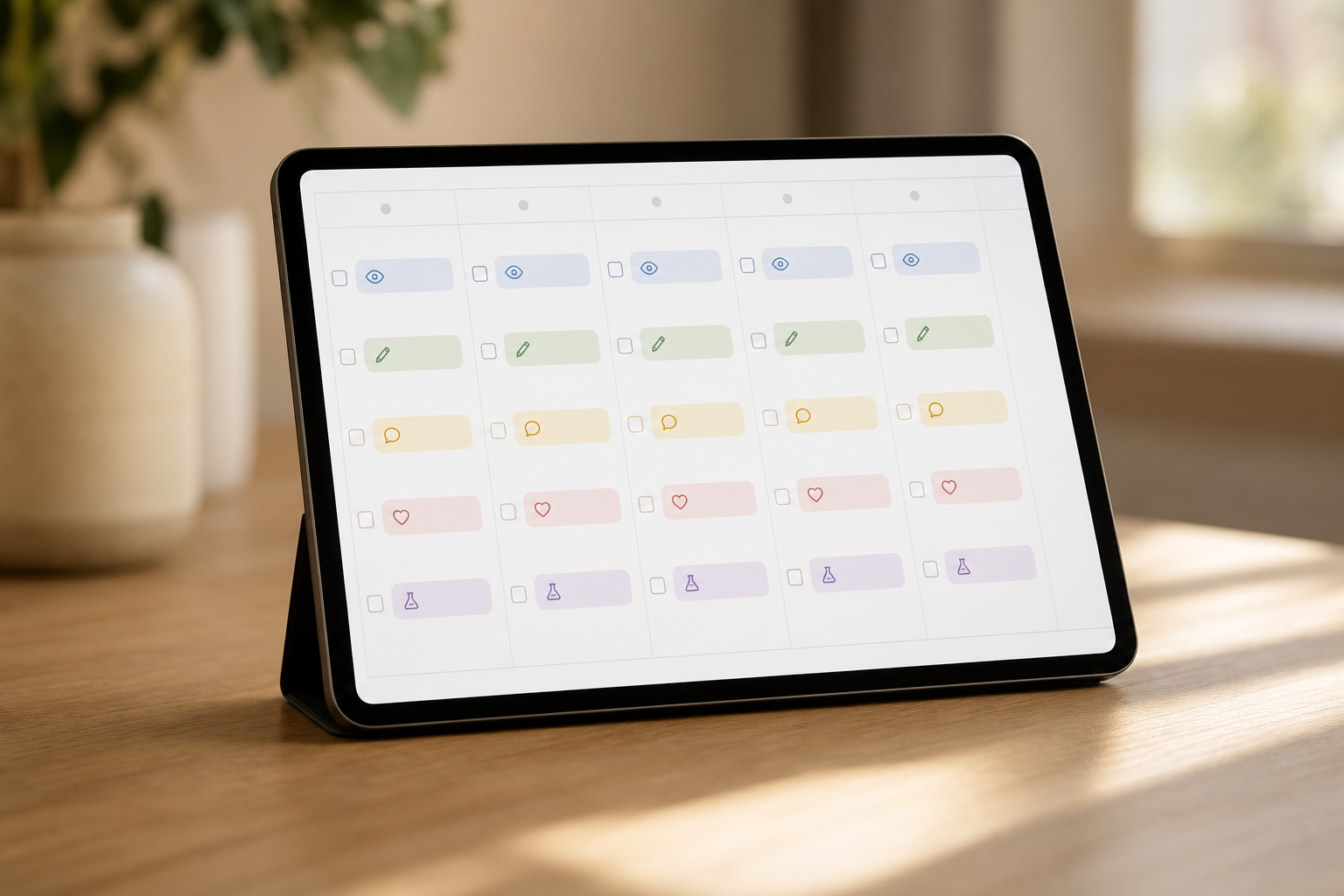
As a cross-check, many agencies run a similar cadence in B2B. See how they stage browsing and posting in this playbook: How to Warm Up TikTok Accounts for Marketing Agency Campaigns. The same logic applies here. Validate hooks before scaling.
Therefore, if you want hands-on help following this exact ramp, a tiktok account warm-up service helps. It keeps you on timeline and avoids spammy footprints.
5 Warm-Up Mistakes That Kill Course Creators' TikTok Reach
Warm-up isn’t busywork. It’s insurance against wasted content. Here are the five fails I see every month and how you fix them.
Mistake 1: Posting Promos on Day One
Why it hurts: new accounts that push external links or sales language trip low-trust signals and get tiny test buckets. Fix it by running 7–10 days of value-only posts. Use soft authority lines (“I teach X daily”) with no hard CTA. Then add your first promo on Days 12–14.
Mistake 2: Bots or Engagement Pods
Why it hurts: inauthentic patterns, burst likes from shared IPs, scripted comments, or 24/7 activity get flagged. They depress reach long-term. Fix it with real-device, human actions capped to normal ranges (10–15 comments per day, 5–10 follows). Never buy views.
Mistake 3: Skipping the Browsing Phase
Why it hurts: if you never watch, TikTok can’t classify your niche and shows your posts to random viewers who don’t care. Fix it by watching 20–30 minutes per day in your topic for the first 7–10 days. Search your keywords, linger on relevant clips, and comment like a peer.
Mistake 4: Copy-Pasting Your Instagram Strategy
Why it hurts: Reels with watermarks, heavy polish, or corporate vibes tank on TikTok, which favors quick cuts, native trends, and raw demos. Fix it by shooting native. Use a trending sound quietly under speech when it fits, build hooks for the first two seconds, cut jargon, and show instead of tell.
Mistake 5: Relying on One Account
Why it hurts: one community guidelines strike or device glitch can pause your launch, all eggs, one basket. Fix it by warming two to four accounts and distributing content. Rotate hooks and thumbnails so if one stalls the others carry momentum, and keep each on a real phone.
As a result, using a tiktok account warm-up service helps enforce these guardrails: real user engagement, real devices, and no artificial activities.
Also Read!
Social Reel Farm vs Arcads for Course Creators: Which Is Better for AI UGC Video Creation?
Tools and Services That Help Course Creators Warm Up TikTok Accounts
You can DIY this, use analytics tools for intel, or outsource the manual work. The right path depends on how many accounts you manage and how tight your launch timeline is.
DIY Tools: Plan, Schedule, and Track
Use TikTok’s native analytics to monitor hold rates at 3s/5s/10s and average watch time. Saves and shares are strong signals of course-buying intent. Scheduling tools like Later or Buffer let you queue one to two posts per day during warm-up.
Don’t batch-drop content at odd hours. Keep a simple hook tracker noting date, hook type (curiosity, myth, story), filming style, and key metrics. Then double down on winners after 10–14 days.
For more structured examples across industries, this agency-focused guide shows staged posting ladders you can adapt: Best TikTok Account Warm-Up for Marketing Agencies in 2026.
Analytics Tools: Watch Your Niche
Tools such as Pentos or Exolyt (mention only) help you spot which formats and sounds spike in your niche during your 14-day window. They also track competitor hooks and lengths. Log what you find in a spreadsheet: hook phrases, video length, on-screen text, and comment themes. Then answer the best prompts with new videos.
Done-For-You Services: Real Devices, Human Operators
Services like Social Reel Farm handle structured warm-up, hook testing, and gradual posting ramps using real devices and human operators. That means 1,000+ manually managed mobile accounts, zero artificial engagement, and proper account warm-up before scaling. Your signals stay clean.
Therefore, if you’re spinning up multiple accounts for a launch window, a tiktok account warm-up service can keep behavior clean and timelines on track.
What to Do After Your TikTok Account Is Warmed Up
First, confirm you’re ready to shift into sales mode. Look for a steady baseline above zero views. For example, 500–1,500 per value post, plus comments from real profiles with on-topic questions. Your analytics should show For You distribution, not just Follow tab impressions.
Next, introduce sales content without tripping suppression. Use the 80/20 rule with 80% value posts and 20% promo, starting with one promo per five posts. Build promos from your best warm-up hooks. If myth-busting held 40%+ at five seconds, open with that myth-buster and then bridge to your course. For multi-account deployment, stagger the same idea with new hooks, captions, and thumbnails across two to four warmed accounts.
If views dip, treat it like a system check. Pause promos for three to four days and return to pure value in your top-performing format. Refresh formats every two to three weeks by swapping camera angles, adding quick B-roll, or testing a listicle style. If you go dark for 21+ days, re-warm dormant profiles with three to five days of Phase 1–2 behaviors before the next promo.
Finally, this is ongoing. Your audience shifts, the feed shifts, and you will shift with it. A tiktok account warm-up service isn’t a one-off trick. It’s a repeatable play whenever you add accounts or revive old ones.
 leading into an 80/20 content mix, multi-account rollout, and promo cadence tuning; clear arrows, concise labels)
Key Takeaways
- Warm-up is a 10–14 day trust-building phase that protects your best content from low-reach dead starts.
- Course creators face extra friction from sales cues; earn trust with value-first posts before any promo.
- Use a four-phase plan: setup/browse → 1/day value → 2/day with hook tests → 80/20 with soft promos.
- Avoid bots and pods; use real devices and human engagement to keep signals clean.
- Decide cadence with data (hold rates, watch time, saves), then scale across multiple warmed accounts.
What to Do This Week
Block 20 minutes per day to browse in your niche. Write seven low-stakes value hooks, and schedule one post per day for the next week. Track 3s/5s/10s holds and saves in a simple sheet, then plan your first soft promo for Day 12. If you’re launching across several profiles in 2026, standardize this warm-up on each account before you scale.