
 Post by
**Start faster hook tests today →
63% of top-performing TikTok ads deliver their brand message in the first 3 seconds. That’s why short-form video hook testing is the fastest way I know to cut wasted spend. In 2026, the scroll is ruthless, but a tight 1–3 second intro can flip your metrics from “meh” to “printing.” Here’s the direct answer: test 5–8 different hooks against the same body video, measure who watches past 3 seconds, and only scale the hooks that cross clear benchmarks.
Short-form video hook testing isn’t about luck. It’s a controlled process: vary only the opening 1–3 seconds, keep the rest identical, and judge each variant by the same metric set over 48–72 hours. You’ll learn which angle earns the “thumbstop” (a viewer pausing their scroll), which story keeps them, and which CTA gets the click.
As a creative strategist who has built and tested hundreds of hooks, I get how chaotic this feels. Budgets are tight, the clock ticks, and you’re shipping 10 assets a week while fighting creative fatigue. The framework below removes guesswork. You’ll see how hook rate links to CPA and ROAS, why testing on warmed accounts matters, and how to take a winner from idea to scale without burning cash.
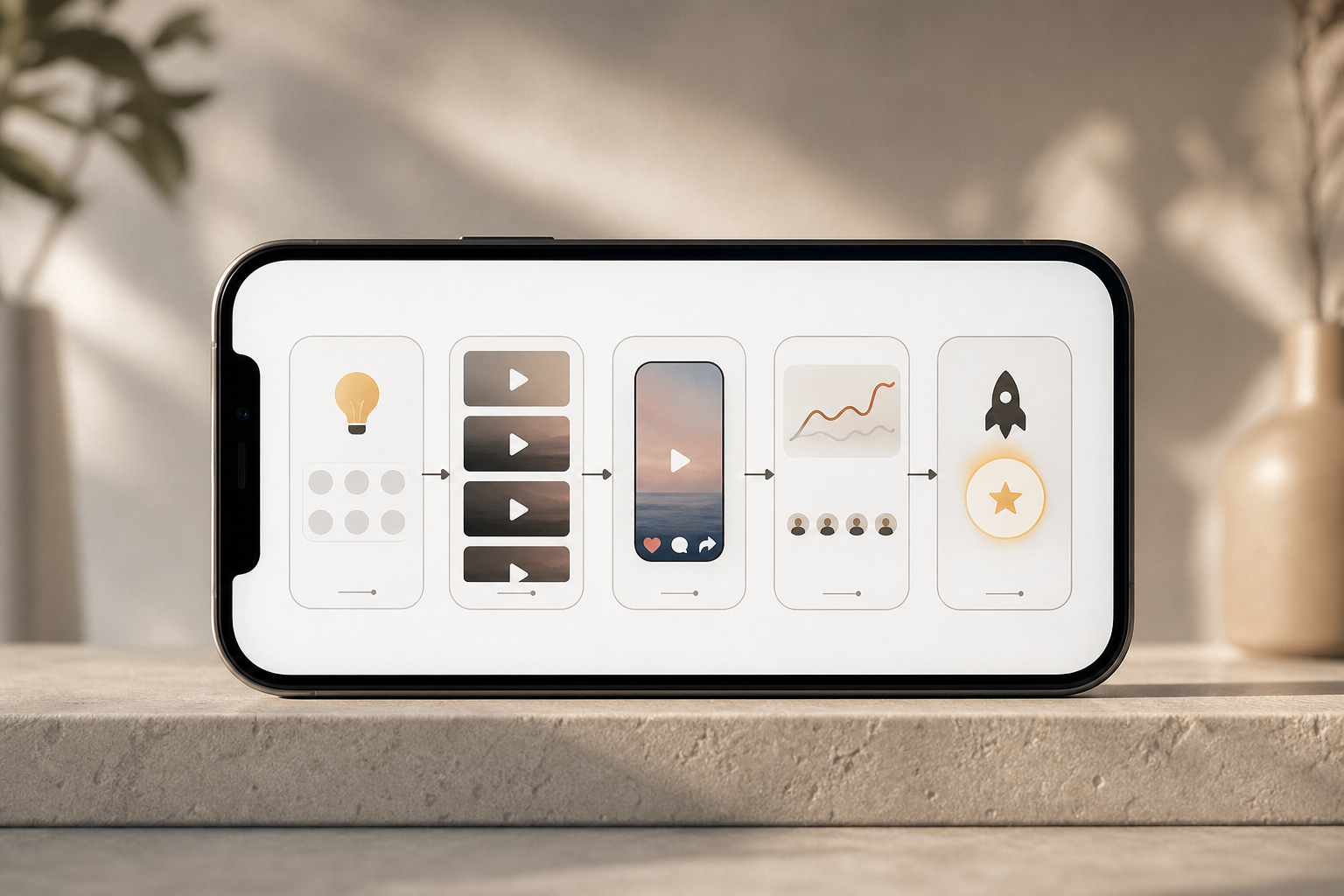
Why Your First 2 Seconds Decide Whether Ecommerce Videos Convert
Hook testing is the process of creating multiple 1–3 second intros for the same video and measuring which keeps more viewers past the 3-second mark. TikTok reports that 63% of top-performing ads deliver their brand message in the first 3 seconds. For ecommerce, those two facts tie together: if your hook doesn’t stop the scroll and signal value fast, you pay for impressions that never become adds-to-cart.
Here’s the mental model. Hook rate is the percentage of impressions that turn into 3-second views (3s views ÷ impressions). Thumbstop ratio is a related top-of-funnel signal that shows how many impressions pause long enough to count as an early view. When hook rate climbs, your CPM waste drops, your click-through rate (CTR) rises, and your cost per add-to-cart (CPATC) and CPA fall. As a result, ROAS improves because more qualified users move through the funnel from the same spend.
Consider a concrete ecommerce example. You run two identical 20-second product demo videos for a skincare serum. The only change is the opening line.
- Video A hook: “Derms don’t want you to know this.” Hook rate: 11%. CTR: 0.7%. CPATC: $10.40. CPA: $42. ROAS: 0.9.
- Video B hook: “I tested this on half my face for 7 days.” Hook rate: 34%. CTR: 1.9%. CPATC: $3.60. CPA: $18. ROAS: 2.3.
Same footage, same offer, different hook. The higher hook rate kicked off better hold, more clicks, and cheaper carts, which lifted ROAS. That is the compound effect you’re after.
The four metrics to track on every test
- Hook rate: 3-second views ÷ impressions. Your primary go/no-go signal.
- Hold rate: % of viewers who reach 50% and 75% watch time. This shows if the story after the hook lands.
- Click-through rate (CTR): clicks ÷ impressions. See click-through rate for a formal definition.
- Cost per add-to-cart (CPATC): spend ÷ adds-to-cart. This predicts your CPA shift before full conversion data matures.
“If the first two seconds don’t earn attention, no edit trick can save the rest.” — Every paid social buyer who’s watched a good concept die on the scroll
Also Read!
Social Reel Farm vs TokUpgrade for Course Creators: Which Is Better for TikTok Account Warm-Up?
A 6-Step Framework for Testing Video Hooks on TikTok and Reels
Short-form video hook testing works best when you change only the first 1–3 seconds and keep the rest locked. Below is the exact process I use across TikTok and Instagram Reels. Follow the steps in order.
Step 1: Categorize hook types
First, label the types you’ll test so you get range, not eight versions of the same idea.
- Problem call-out: “Stop tossing half your produce every week.
- Bold claim: “This $19 brush saved me 10 minutes every morning.
- Product-in-action: “Watch this spill disappear in 3 seconds.
- Social proof: “12,431 reviews say it runs true to size.
- Pattern interrupt: A sudden sound + text “POV: Your jeans actually stretch.
- Curiosity gap: “What’s inside this 4-ounce bottle is wild.
Step 2: Write 5–8 hooks per concept
Second, script 5–8 hook lines for one creative body. Keep the body (voiceover, shots, length) identical. Vary the hook type and wording. For a coffee scale, eight hooks might include “Stop guessing your pour-over,” “I ruined 100 cups before this,” “A barista graded my brew,” and so on.
Step 3: Produce modular openings
Third, film or edit in a modular way so only the first 1–3 seconds change. Keep the same background music, captions style, and first cut point after the hook. In practice, I place a hard edit at 1.5–2.0 seconds. That lets me swap the opening without touching the rest, so test data stays clean.

Step 4: Set up a controlled test
Fourth, run a controlled test. For organic, post from a warmed account with a steady cadence (at least 5 posts in the prior 10 days). Isolate testing on a secondary account if your main profile has brand image risk. Stagger uploads 20–30 minutes apart so distribution windows don’t fully overlap.
For paid, I prefer ABO for early signal clarity, then CBO once you have two or more winners. Set each hook variant as its own ad with identical targeting, budget, and optimization goal. Use the same thumbnail and caption. Spend thresholds: aim for 1,000–2,000 impressions per variant per platform before judging. On TikTok, I like $50–$100 per ad over 48–72 hours; on Reels, budget to match your typical CPM.
For both organic and paid, keep cross-platform differences in mind. TikTok feeds reward fast, raw hooks; Reels often trends more polished. I’ll come back to this in the mistakes section.
Step 5: Measure at 48–72 hours with clear cut lines
Fifth, set simple thresholds so you don’t overthink. If hook rate is above 30%, the variant earns a scale test. If it’s below 15%, kill it and recycle only the idea, not the line. Gray zone hooks (15–30%) can move forward if hold rate and CTR are strong.
Moreover, look at CPATC as an early conversion proxy. If CPATC is 2–3x better than your baseline, you probably have a lower-CPA winner even before purchase data catches up.
Step 6: Graduate the winner and iterate
Sixth, take the best hook and graduate it. Keep the opening words and timing, then test body changes: add proof shots earlier, cut dead air, punch the CTA. Scale budget with CBO only after a second round confirms performance. In addition, spin 3–5 sibling hooks based on the same angle (“I tested X for 7 days…” → “I wore X for one work week…”) to fight creative fatigue.
Hook Type → Best For → Example
| Hook Type | Best For | Example |
|---|---|---|
| Problem call-out | Pain-driven products | “Your pan shouldn’t smoke at medium heat.” |
| Bold claim | Low price points, impulse buys | “Under $25 and fixes my neck pain.” |
| Product-in-action | Visual demos | “This lid seals in 1 second, watch.” |
| Social proof | High-trust categories | “7,200 five-star reviews this year alone.” |
| Pattern interrupt | Fashion/beauty/novelty | Quick zoom + “Wait, pockets?!” |
| Curiosity gap | Premium/unique benefits | “I stopped using shampoo after this.” |
Furthermore, format test before you expand. Validate the hook format with a small budget. Then move the winner into your broader account mix. This is content validation before scaling to your full network.
“Test the format, not just the phrase. The angle plus timing is what holds the view.”
For agencies or affiliates reading this, I documented ad account structures and scale paths in these deep dives: Best Video Hook Testing for Marketing Agencies in 2026 and Best Video Hook Testing for Affiliate Marketers in 2026. They expand on multi-account deployment and cross-platform tweaks.
5 Hook Testing Mistakes Ecommerce Brands Keep Making
Hook tests fail for the same five reasons. Fix these, and your hit rate jumps fast.
First, testing hooks and body copy at the same time. If you change the first two seconds and the rest, you’ll never know what worked. The fix: lock the body; only swap the first 1–3 seconds for the test.
Second, judging hooks by view count instead of hook rate. Broad targeting can inflate views while your hook still loses attention. The fix: prioritize hook rate and hold rate; only consider views in context of those.
Third, testing on cold accounts with no warm-up. New or inactive profiles get weak distribution, which skews results. The fix: do structured account warm-up and post consistently for a week before your test.
Fourth, giving up after one round. A good brand runs 20–30 hooks per product launch to find 2–3 keepers. The fix: plan two to three testing cycles up front and budget for them.
Fifth, ignoring platform differences. Chaotic, native hooks win on TikTok; Reels prefers cleaner, aspirational openings. The fix: adapt the same angle to each platform’s pace and visual norms.
Quick checklist to avoid unforced errors
- Change only the first 1–3 seconds in a test.
- Read results at 48–72 hours; don’t panic at 6 hours.
- Warm accounts before content goes live.
- Plan 20–30 hooks per launch.
- Edit hooks for TikTok vs. Reels speeds.
For a clean definition of ROAS as you tie results to spend, here’s a primer on return on ad spend. Grounding your calls in the math keeps debates short and decisions fast.
Also Read!
Tools and Resources for Scaling Your Hook Tests
You don’t need a big stack to start. Start with free tools, then add paid options as volume grows.
First, for inspiration and editing: TikTok Creative Center (for trending hooks and formats), Meta Ads Library (for competitor angles), and CapCut (for modular editing with consistent captions). These give you source material and a fast workflow without cost.
Second, for analytics and tracking: Foreplay and Minea help you track creative trends and spot patterns across brands. For raw hook rate and hold rate, use each platform’s native analytics. On paid, rely on your ad manager breakdowns; on organic, export watch-time graphs and note 3s, 50%, and 75% retention points.
Third, for scale and multi-account deployment: tools like Social Reel Farm are built for systematic hook testing across large account networks. The system operates 1,000+ manually managed mobile accounts and uses data-led posting decisions with zero artificial engagement. The key benefits here are structured account warm-up before campaigns, format testing before expansion, and content validation before scaling to a full network. If you’re comparing options, this side-by-side is useful: Social Reel Farm vs Viral Launch Hooks for Affiliate Marketers: Which Is Better for Short-Form Video Hook Testing?.
Build a “hook bank” you can query in seconds
- Keep a spreadsheet with columns: Hook text, Type, Date, Platform, Hook rate, Hold 50%, Hold 75%, CTR, CPATC, Outcome (Scaled/Retired).
- Tag proven angles (“7-day test,” “half-face demo,” “POV”) so you can repurpose without repeating the exact line.
- Revisit the bank each quarter to avoid creative fatigue and to brief new creators.
**See scale plans today →
And because this is a 2026 guide, a reminder: platforms change, but attention physics don’t. Systematic hook testing for improved view retention still wins.
Key Takeaways and What to Do This Week
Key takeaways
- The hook is a 1–3 second test of value; raise hook rate, and your CPA and ROAS follow.
- Measure hook rate, hold rate, CTR, and CPATC; judge at 48–72 hours with clear thresholds.
- Short-form video hook testing means changing only the first 1–3 seconds; keep the body identical.
- Plan 20–30 hooks per product; expect 2–3 keepers and constant iteration to avoid creative fatigue.
- Warm accounts and adapt to TikTok vs. Reels pacing; scale winners with CBO only after re-validation.
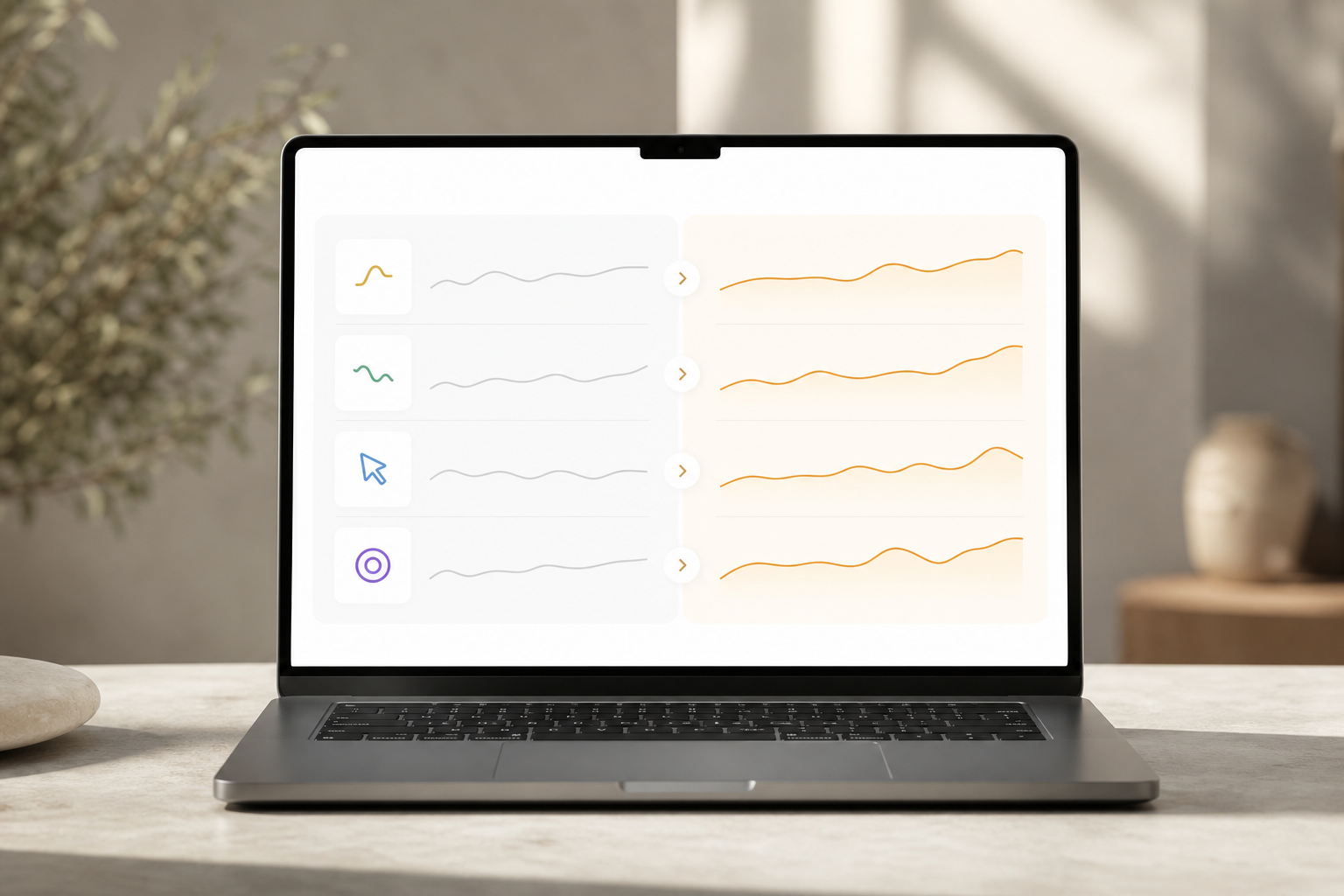
Your 7-day action plan
Day 1–2. Audit the last 10 videos. Calculate hook rate (3s views ÷ impressions) and note hold at 50% and 75%. List top and bottom three.
Day 3. Categorize your hook types. You’ll likely find you overuse one type (e.g., problem call-out) and ignore others like social proof or curiosity gaps.
Day 4–5. Script five new hooks for your best seller using types you haven’t tried. Keep the body unchanged. Produce modular openings only.
Day 6. Post or launch the test. For paid, set ABO with identical budgets and targeting. For organic, stagger uploads on a warmed account.
Day 7. Read the data. Scale anything with hook rate ≥30%.
Kill <15%. For 15–30%, check hold and CPATC before deciding. Graduate the winner, then iterate body/CTA work.
Most ecommerce brands see measurable improvements within two to three testing cycles, not overnight. Stay systematic, bank your learnings, and the compounding gains show up in your blended CPA and ROAS.
**Book a hook-testing consult today →
As you keep building, reference deeper playbooks for specialized needs: the agency guide and the affiliate tactics overview each adapt this process to 2026 constraints in their lanes.