
 Post by
TikTok has evolved far beyond viral dance trends. In 2026, it is one of the most powerful digital growth platforms for brands, startups, agencies, and personal brands. Businesses are no longer asking whether they should be on the platform; instead, they are asking how to optimize their presence. They are asking how to scale effectively.
One strategy that keeps gaining attention is running more than one account.
Instead of building everything under a single profile, brands are experimenting with separate pages for niche content, regional targeting, product categories, or trend-based engagement. For companies using TikTok for business, this approach can look attractive because it promises sharper positioning and faster audience capture.
But does it actually work in practice?
Managing one account is already demanding. Adding more profiles increases content workload, strategy complexity, and operational pressure. Without structure, growth can quickly become inconsistent.
Listen To The Podcast Now!
Why Businesses Consider Multiple Accounts
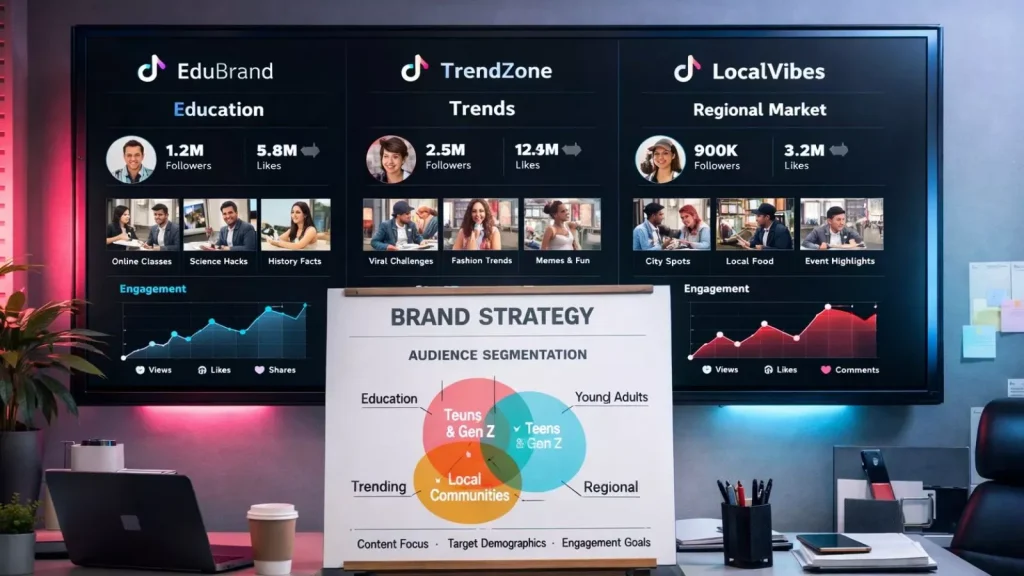
The idea behind multiple accounts is simple. One profile may struggle to speak clearly to different audience segments. When content themes vary too much, the algorithm may receive mixed signals about who the content is for.
For example, a brand that posts educational tutorials, entertainment clips, behind-the-scenes content, and aggressive promotional videos on one account may experience unstable engagement. Audience expectations become unclear. Retention can drop because viewers are unsure what type of content they will see next.
By separating content into focused accounts, businesses aim to create clarity. One account might focus only on industry education. Another might focus on short trend-based videos. A third might target a specific geographic market.
For brands serious about TikTok for business, this focused approach can strengthen niche authority. The algorithm tends to reward clear positioning and consistent themes.
However, clarity alone does not guarantee success. Execution determines results.
The Real Benefits of a Multi-Account Strategy
When executed properly, running multiple accounts can offer strategic advantages.
One of the biggest benefits is audience precision. Each account speaks directly to a defined group rather than trying to appeal to everyone. This often improves engagement rate because the messaging feels more relevant.
Another advantage is creative flexibility. Brands sometimes hesitate to experiment on their main profile due to reputation concerns. A secondary account allows testing bold hooks, trending sounds, or unconventional storytelling without affecting brand perception.
There is also the benefit of segmentation for analytics. When performance data is separated by account theme, it becomes easier to understand which content category generates stronger retention and conversions.
For businesses investing in TikTok for business, this segmentation can support better decision-making when allocating budget and creative resources.
Still, these advantages only materialize when the content strategy behind each account is intentional.
When Multiple Accounts Become a Problem
The multi-account approach often fails for one simple reason. Businesses underestimate the workload.
Each account requires consistent posting, comment management, content planning, analytics tracking, and audience interaction. If one account struggles with consistency, adding another usually multiplies the problem.
Another common issue is content duplication. Some brands post nearly identical videos across accounts without meaningful differentiation. This weakens positioning and can reduce overall performance.
There is also operational complexity. When teams try to manage multiple TikTok accounts without a structured workflow, content calendars become disorganized. Posting frequency becomes inconsistent. Performance tracking becomes fragmented.
For companies that recently set up TikTok account profiles and are still learning the platform, focusing on mastering one account first is often smarter than expanding too quickly.
Scaling should follow stability, not replace it.
Structuring Accounts the Right Way
If you decide to implement a multi-account strategy, structure matters more than volume.
Each account should have a clearly defined identity. That includes a unique content theme, audience persona, and posting rhythm. Overlap should be minimal. If two accounts serve the same purpose, consolidation may be more efficient.
When brands first set up TikTok account profiles for expansion, they should clarify the goal of each one. Is it lead generation, brand awareness, product education, or community engagement? Without a defined objective, growth becomes random.
It is also important to maintain visual consistency within each account. While branding may differ slightly, tone and messaging should remain coherent.
For businesses using TikTok for business, clarity is often more powerful than scale.
How to Create and Manage Additional Accounts Properly

Creating additional profiles is technically simple. The challenge is managing them effectively.
When you create account profiles for strategic expansion, you should immediately integrate them into your content calendar and analytics system. Treat them as part of a unified ecosystem rather than isolated pages.
Workflow management becomes critical here. Batch content creation helps reduce pressure. Recording multiple videos in a single session allows you to distribute content across accounts without daily production stress.
If your brand handles multiple TikTok accounts, centralizing performance tracking is essential. Comparing metrics side by side helps identify which audience segment responds best and where adjustments are needed.
Without structure, expansion leads to burnout. With structure, it creates leverage.
Scaling Multiple Accounts Efficiently
Managing content, engagement, and analytics across multiple accounts can quickly become overwhelming, especially for agencies and growing brands.
This is where structured workflow systems become valuable. Instead of relying on risky automation tactics, businesses can use organized growth platforms to streamline scheduling, performance tracking, and multi-profile coordination.
Solutions like Social Reel Farm are designed to support teams that need operational efficiency without compromising account integrity. By centralizing management processes, brands can focus more on creative strategy and less on repetitive tasks.
For companies serious about TikTok for business, operational structure is often the missing piece between inconsistent posting and scalable growth.
Measuring Performance Across Multiple Accounts
Once you begin operating more than one profile, measurement becomes more complex. Looking at vanity metrics alone will not give you clarity.
Each account should be evaluated based on its objective. If one account focuses on brand awareness, reach, and watch time matter more. If another focuses on conversions, click-through rates, and traffic quality become more important.
For brands using TikTok for business, separating metrics by goal prevents confusion. Comparing all accounts under the same benchmark can lead to incorrect conclusions.
Retention remains one of the strongest indicators of content quality. If viewers consistently watch beyond the first few seconds, the content theme is resonating. When retention drops early, the positioning may need refinement.
Growth across multiple accounts should feel structured. If performance becomes unpredictable across all profiles at the same time, the issue is usually strategic rather than algorithmic.
Consistency in measurement leads to consistency in scaling.
Content Differentiation: Avoiding Internal Competition
One major risk of running multiple profiles is internal competition. If accounts begin targeting the same audience with similar content, they can dilute each other’s reach.
Clear differentiation prevents this problem.
Each account should have a unique content angle. For example, one profile might focus on education, another on storytelling, and another on community-driven content. When positioning overlaps, the algorithm struggles to distinguish audience signals.
Businesses that recently tiktok create account profiles for expansion often copy their main account format without adjusting the niche focus. This reduces the benefit of segmentation.
The smarter approach is to assign each account a clear identity. That identity should influence video style, tone, hook format, and content structure.
When differentiation is strong, the accounts complement each other instead of competing.
Budget Allocation Strategy for Multiple Accounts

If paid campaigns are part of your strategy, budget distribution becomes important.
Instead of dividing resources equally, allocate the budget based on performance. Accounts that show stronger engagement and clearer positioning should receive more amplification.
For brands investing in TikTok for business, paid support should enhance proven content rather than rescue weak content. Promoting underperforming accounts rarely fixes structural problems.
It is also important to test organically before investing heavily in paid promotion. When an account consistently produces stable engagement, scaling through ads becomes more predictable.
A balanced approach combines organic validation with strategic budget allocation. This keeps spending efficient while allowing growth to accelerate where it is already working.
When to Consolidate Instead of Expand
Not every business benefits from multiple profiles. Sometimes consolidation is the smarter move.
If two accounts share similar audiences and content themes, merging efforts into one stronger account may increase overall authority. Concentrated engagement signals often outperform fragmented ones.
Businesses that manage multiple TikTok accounts without sufficient content volume may struggle to maintain quality across all profiles. In such cases, reducing focus to one or two well-maintained accounts improves stability.
Expansion should be a strategic decision, not an emotional reaction to slow growth. Sustainable success on TikTok for business comes from focus and clarity, not just scale.
Knowing when to simplify is just as important as knowing when to expand.
Does the Multi-Account Strategy Actually Work?
The answer is yes, but only under certain conditions.
It works when each account has a distinct purpose. It works when content is consistent. It works when performance data is reviewed regularly. It works when operational systems are in place.
It fails when expansion is driven by impatience. It fails when teams cannot maintain consistency. It fails when accounts overlap without clear positioning.
Businesses that master one account first and then expand strategically are far more likely to succeed.
TikTok in 2026 rewards clarity, consistency, and strong audience signals. Whether you choose one account or several, the principle remains the same. Content quality and strategic focus determine growth.
FAQs
1. Is running multiple TikTok accounts good for business growth?
It can be very effective when executed strategically. A multi-account setup allows brands to target different audience segments with focused messaging. For companies using TikTok for business, this can improve engagement and niche authority, but only if each account has a clear purpose and consistent posting schedule.
2. How many TikTok accounts should a business manage?
There is no fixed number. Most businesses benefit from starting with one strong account and expanding only after they establish stable performance. Managing too many profiles too early can reduce content quality and create operational stress.
3. How do you set up TikTok account profiles for business use?
When you set up TikTok account profiles for business, start by defining the account objective, target audience, and content theme. Choose a clear niche focus and optimize the bio for clarity. Each additional account should serve a different strategic purpose rather than duplicating the same content.