
 Post by
If you’re considering done-for-you tiktok posting to scale your e-commerce brand in 2026, this guide explains what DFY truly includes, how to choose the right provider, and which KPIs tie views to real orders.
**Get Managed Posting Pricing Today →.
What Does Done-for-You TikTok Posting Actually Mean for an E-commerce Brand?
Done-for-you tiktok posting covers far more than uploading videos. In practice, you’re buying a system that handles content creation, scheduling, posting, account management, analytics, and ongoing creative testing. For a store, that means product demo formats, shoppable hooks, and a posting cadence that the algorithm can trust.
However, you still have a role. You provide product samples, approve the core creative direction, and share clear conversion goals. Without that, even the best partner can only guess. Think of DFY as your content engine, pointed by your goals.
Levels of TikTok DFY (Know What You’re Buying)
- Content-only studios: They deliver videos. You handle posting and results.
- Full account management: They post, engage, report, and iterate on your main account.
- Multi-account distribution systems: They create, warm, and post across many real accounts to spread risk and amplify reach.
For ecommerce, multi-account content distribution can be a force multiplier. New accounts get a small boost, and spreading content across a network lets you find winning hooks faster without risking your flagship handle. It also supports TikTok Shop and bio-link tests without spamming one profile.
What You Still Own (Even With DFY)
- Samples and specs: Send products, shade charts, SKUs, and use cases.
- Brand voice lines: Provide “always say/never say” rules and a few sample captions.
- Outcomes: Share if you’re optimizing for TikTok Shop orders, link clicks, or cost per acquisition.
- Compliance guardrails: List mandatory disclosures (claims, ingredients, certifications), restricted phrases, and any industry-specific review requirements so creators stay on-message and within policy from day one.
A strong provider will also include done-for-you account warmup and structured posting. That means gradual, human activity on real devices, not bots, before your big push. Expect hook + demo videos, UGC avatar generation, slideshow videos, automated posting, and even greenscreen meme content. Those formats move product because they show the thing fast and in use.
Quick gut check: If a vendor can’t explain their warm-up method or how they test hooks, you’ll end up with noise, not sales.
DFY Ecommerce Formats That Consistently Convert
- Hook + product-in-hand demos within 1–2 seconds to frontload the payoff.
- “POV: your problem solved” skits that mirror buyer anxieties and outcomes.
- Unboxings with tactile sound (ASMR) for jewelry, tech accessories, or beauty.
- Greenscreen replies to real comments to build trust and answer objections.
- Before/after or setup-to-finish time-lapses for home, fitness, or skincare.
- Creator “day-in-the-life” integrations that naturally place your product.
- Live-shopping teasers and condensed highlights that spotlight bundles, coupons, or Shop deals within the first second.
Also Read!
How to Test Video Hooks for Affiliate Marketing on TikTok and Reels
How to Choose and Work with a Done-for-You TikTok Posting Service: Step by Step
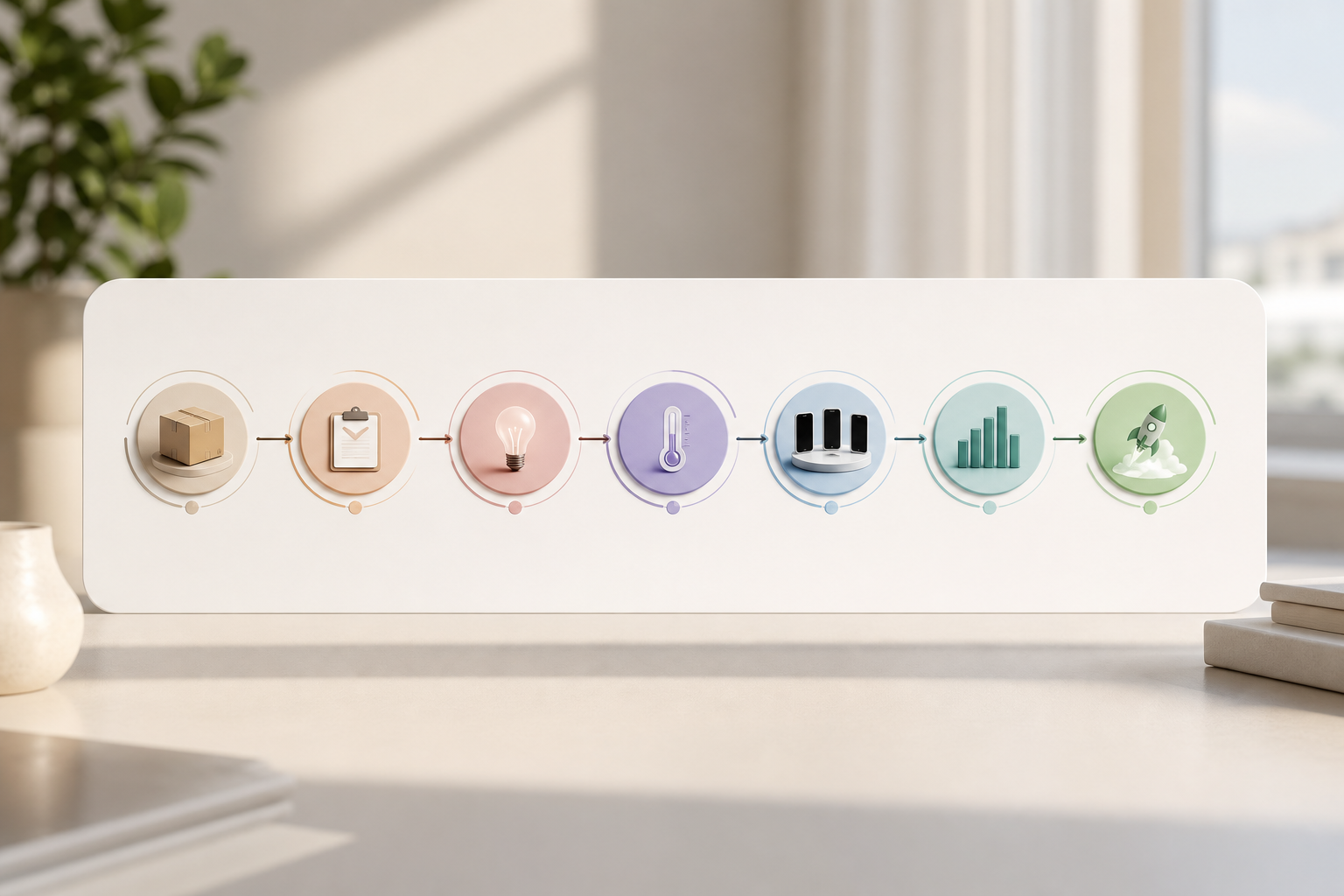
Picking a partner is a process. Use this seven-step framework to avoid months of drift and sunk costs while you scale in 2026.
The Seven-Step Selection Framework at a Glance
- Define success with numbers that matter to revenue.
- Choose a service model that fits AOV, margin, and speed to learn.
- Pressure-test provider methods (warm-up, testing, devices, distribution).
- Demand ecommerce-relevant case studies with conversion outcomes.
- Lock a lightweight but reliable approval workflow.
- Give the system 60–90 days to warm and learn.
- Make posting decisions from KPIs, not vibes.
- Audit your current TikTok and define “success”. For a skincare brand, success might mean a 20% lift in TikTok Shop orders and average watch time above 5 seconds. For a DTC apparel company, you might target profile visits to size guides and add-to-carts.
Pull the last 90 days: posting consistency, average watch time, profile visits, and link click rate. If you want a quick pulse check on creative trends, open this internal tool to spot patterns: tiktok viewer.
-
Pick your service model: single-account, multi-account, or hybrid.
If you sell high-AOV furniture, a single authority account with deep demos can work. If you sell <$50 accessories, a multi-account system can test dozens of hooks across many profiles to find buyers faster. Hybrid pairs both. -
Evaluate providers on five hard criteria.
Ask which content formats they use for ecommerce (unboxings, ASMR demos, greenscreen replies), if they use real accounts vs. bots, their structured account warm-up plan, how they run systematic hook testing, and whether posting choices are data-led. For example, a snack brand should see clear tests like: same product demo with four 1-second hooks, posted across warmed accounts, then scaled based on view retention.
Pro tip: If a provider talks only about “viral potential” and not about first-second hook variants, watch-time thresholds, device policy, and Shop attribution, you’re evaluating a creative studio, not a DFY posting system.
-
Request ecommerce case studies and sample content with conversion data.
Follower growth without store visits is a vanity win. Ask for examples that show watch time, profile visits, link clicks, and cost per acquisition. For a vitamins brand, you should see how moving from polished lab shots to raw morning-routine clips cut CPA. -
Agree on a content approval workflow that won’t throttle posting.
Set light-touch guardrails. Approve a creative direction and a caption bank upfront. Then review in batches, not one-by-one. A DTC apparel team might clear 15 hooks and 30 captions monthly so posting stays daily. -
Set a 60–90 day evaluation window.
Accounts need warm-up before campaign content hits. During this time, structured account warm-up before campaign content goes live protects performance and reduces the risk of throttling. Judge trend lines by week 4, not day 4. -
Track the right KPIs and make data-led posting decisions.
Watch time, hold rate at 3 seconds, profile visits, link clicks, and CPA matter. Shares and saves are nice, but they don’t pay rent. A coffee brand should re-post only the creatives that clear a baseline hold rate and drive add-to-carts.

**Get a No-Pressure Strategy Call →
1.
New or dormant accounts need steady human signals before TikTok trusts them. Brands that skip this see views stall or get throttled.
Correction: Start with a two-week warm-up and ramp posting. Build a baseline of real activity, comment replies, and consistent post times before pushing volume.
2.
Follower counts won’t fix a checkout that no one visits. If your profile isn’t driving store sessions, those numbers won’t pay off.
Correction: Judge by watch time, profile visits, link clicks, and CPA. If a vendor can’t put those on a weekly dashboard, reconsider the engagement.
3.
On TikTok, glossy can feel like an ad. Raw native clips win. I’ve seen a simple “open the box, flip the clasp” beat a studio spot for a jewelry line by a mile.
Correction: Balance raw UGC with clean product close-ups. Establish guidelines for lighting, pacing, and first-second payoff rather than rigid creative do’s and don’ts.
4.
The first 1–2 seconds decide your reach. Without structured hook tests, you’re guessing.
Correction: Test 4–6 hooks per product before scaling. Keep the middle and end identical; only change the first second so you can attribute differences to the hook.
5.
TikTok tends to give new profiles a small boost. A multi-account deployment spreads risk and finds winning angles faster, especially for <$50 products.
Correction: Use a controlled set of fresh, real accounts to distribute reach. Track per-account health (views/post, watch time) so you can rotate or pause underperforming handles.
The fix across all five: adopt account warm-up before scaling, format testing before expansion, zero artificial engagement, and hook optimization with multi-account deployment aimed at conversion.
Operational Guardrails to Set with Your Provider
- Posting windows and frequency: lock in daily time slots and minimum posts/week so cadence never slips.
- Content rights and creator licensing: clarify organic, paid, and allowlisting usage terms up front.
- Comment moderation SOP: define how quickly to answer questions, escalate sensitive topics, and capture VOE (voice of the end-user).
- UTM and Shop attribution: standardize link structures to attribute profile clicks and TikTok Shop orders cleanly.
- Pause criteria: agree on thresholds (e. g., 3-day hold-rate dip) that trigger a creative reset or account rotation.
- Crisis and compliance protocol: outline product-claim review, legal approvals for sensitive categories (health/beauty), and steps for takedowns or error corrections within hours, not days.
Provider Red Flags to Watch
- Vagueness around device policy or reliance on emulators/bots for posting.
- No written warm-up plan or testing matrix for hooks and formats.
- “Guaranteed followers” or any promise disconnected from revenue KPIs.
- One creator style for all products with no avatar variety or audience testing.
- Reporting that highlights vanity metrics while hiding link clicks or Shop orders.
Tools and Services for Done-for-You TikTok Posting
You have three tiers to choose from. Pick based on your budget, team bandwidth, risk tolerance, and how fast you need to learn.
Quick Chooser: Which Tier Fits You?
- You can shoot simple demos in-house and just need consistency → Start with DIY scheduling.
- You want breakthrough creative but can manage daily posting → Hire a creative agency.
- You need scale, warm-up, testing, and multi-account reach handled end-to-end → Choose a full-service DFY system.
DIY scheduling tools (Later, Hootsuite, Buffer)
These help brands that already create content but need automated posting. They handle calendars and reminders. They won’t run your strategy, warm your accounts, or test hooks. If you’re a small candle shop posting three times a week, this might be enough until you feel stalled.
Creative agencies (Movers+Shakers, Viral Nation)
These teams make strong TikTok content. They usually expect you to own the account, posting, and iteration. For a premium beauty brand that needs standout concepts and can run its own channel day to day, this can work well.
Full-service managed posting systems (one option: Social Reel Farm)
This category handles account creation, structured warm-up, content validation before scaling to a network, and data-led posting decisions. As one example, tools like Social Reel Farm focus on real-device deployment instead of bots, 1,000+ manually managed mobile accounts operated by real team members, systematic hook testing, and zero artificial engagement. That mix helps reduce policy risk and speeds up learning. If you want to see how creative and posting frameworks line up with ad tests, open the in-house tiktok viewer and map creative to metrics.

A reliable DFY partner doesn’t just “post more.” They operationalize learning: isolate the hook, control the middle, measure the outcome, then scale only what moves revenue.
Budget and Timeline Expectations
- DIY schedulers: low monthly fees; expect learning primarily from your own iteration speed; timelines depend on your content volume.
- Creative agencies: mid-to-high project fees; faster creative breakthroughs but slower iteration if approvals are heavy; you own channel ops.
- Full-service DFY: retainer plus production; fastest learning loop due to warm-up + network posting; 60–90 day ramp to establish baselines and winners.
Compliance and Risk Notes to Clarify Early
- Device policy: insist on real-device posting and no emulator/bot traffic to avoid throttling or account flags.
- Creator disclosures: set clear FTC/ASA compliance for paid partnerships and gifted products.
- Music licensing: confirm access to commercial sound libraries and brand-safe tracks.
- Regional nuances: align on markets, languages, and Shop eligibility to prevent geo-related suppressions.
When in doubt, document it. A one-page compliance addendum (claims, disclosures, restricted phrases) saves weeks of cleanup later.
Also Read!
Best Video Hook Testing for Affiliate Marketers in 2026
Social Reel Farm vs TokUpgrade for Affiliate Marketers: Which Is Better for TikTok Account Warm-Up?
What to Do This Week: Your First Steps Toward Managed TikTok Posting
You can set the table in a few hours and learn a lot about your fit for done-for-you tiktok posting.
-
Audit your existing account(s)
Check posting consistency over the last 90 days, average watch time, and profile-to-link-click ratio. If you can’t post at least 5–7 times per week or your watch time is flat, a DFY system can fix the baseline. Write down your last three videos that cleared above-average hold rate. -
Write a one-page brief
List your top three products, target customer, price points, and your main goal (awareness, Shop orders, or CPA). A good provider will ask sharp follow-ups about hooks, demos, and objections. Keep it to one page so approvals don’t lag. -
Request a “test content batch”
Ask for 3–5 sample clips: a hook + demo, a UGC-style review, and a greenscreen reply to a buyer question. Review for brand voice, clarity of product payoff, and early hook strength. If you’re happy, agree on a 60–90 day window with weekly check-ins. -
Set up measurement before the first post
Create UTM templates for bio links, ensure TikTok Shop attribution is active, and define KPI floors (e. g., 3s hold rate, CTR, CPA) so you can make fast keep/kill decisions by week two.
As you move, remember this: outsourcing TikTok doesn’t erase your voice; it enforces your cadence. You keep the brand rules. The partner keeps the calendar and the testing drumbeat.

Mini-FAQ: DFY TikTok for E-commerce, Answered
-
How many posts per day should a DFY system run?
Most brands see traction at 1–3 organic posts per account per day, with 3–5 hook tests per product per week across a small network. The point isn’t raw volume; it’s structured variety in the first second, posted at consistent windows, and pruned quickly based on watch-time and click outcomes. -
Do I need to ship product to multiple creators?
Yes. DFY thrives on avatar variety. Plan for 3–6 creator “looks” per product category (age, vibe, setting). One unboxing in a bright kitchen and another in a dorm room can unlock different audiences without rewriting the script. Send enough inventory to avoid production gaps. -
What’s the difference between account warm-up and posting more?
Warm-up is deliberate: human logins on real devices, profile completion, light browsing, comment replies, and low-stakes posts before a push. It’s about building trust signals. Posting more without warm-up risks throttling if the account appears automated or spammy. -
Can DFY replace paid ads?
Treat DFY organic as a testing and reach engine that lowers CPA by feeding proven hooks into ads. Many brands roll winning organic intros into Spark Ads or creator allowlisting, but DFY organic shouldn’t be your only acquisition channel, use it to make every dollar work harder. -
How soon should we expect sales?
Signals usually show by week 2–3 (hold rate and clicks), with sales compounding by weeks 4–8 as accounts finish warm-up and you scale winners. Set expectations for trend lines, not day-one breakouts, and review weekly dashboards to decide what to double down on.
Key Takeaways
- DFY means more than uploads: it’s creative, posting, account warm-up, analytics, and testing built to sell products.
- Your input still matters: send samples, approve direction, and set a single conversion goal to align the work.
- Use a 60–90 day runway, track watch time and clicks, and scale only what clears your KPI floor.
- For faster learning and less risk, consider multi-account content distribution on real devices with zero artificial engagement.
- If you choose done-for-you tiktok posting, judge partners by how they test hooks and make data-led posting decisions, not by follower promises.
As a final note, systems that rely on human-run, real-device posting are safer for long-term growth than bots. That’s not just preference; it’s risk management. The signal matters more than the stunt.
**Start a 60–90 Day Pilot Plan →
Why trust this approach? Two practical signals: first, real-device deployment and zero artificial engagement reduce policy risk and throttling; second, operating 1,000+ manually managed mobile accounts shows the scale needed to validate content before you roll it out wide.