
 Post by
**[Get a managed hook testing plan →] Hook holds attention (first 1-2s), 2) Body delivers value (5-20s), 3) CTA drives click, 4) Commission earned; modern TikTok/Reels UI elements, bold colors, 2026 style)
Why the First 1.5 Seconds Decide Your Affiliate Commission
As an affiliate, your video isn’t just “content.” It’s a sales path. The first frame must stop the scroll. The next second must confirm relevance. Only then do viewers earn the right to see your proof, offer, and link prompt. That is why short-form video hook testing matters more for affiliates than for brand awareness creators.
Here’s the chain you’re managing: a strong hook lifts 1-second retention rate, the platform expands reach, more viewers see your product mention, and a higher share reaches the CTA. If the hook slips, the whole chain breaks. A mediocre hook doesn’t just lose views, it wastes your entire content investment: filming, editing, captions, and the offer slot you could have given to a better test.
On TikTok and Reels, algorithmic reach tracks early holds. If half your audience bounces at second one, distribution shrinks. You’ll still see a view count, but the average watch percentage will be low, and almost no one will reach your CTA. For affiliates, that’s not a “creative miss.” It’s lost revenue.
Moreover, the goal is different for you than for a brand account. A fashion brand may count a 3‑second scroll-stop as a win if comments and follows rise. You need viewers to stay long enough to see a product demo or proof, then act. Therefore, your hook must not only stop the scroll; it must frame the benefit so the next 5–15 seconds carry purchase intent.
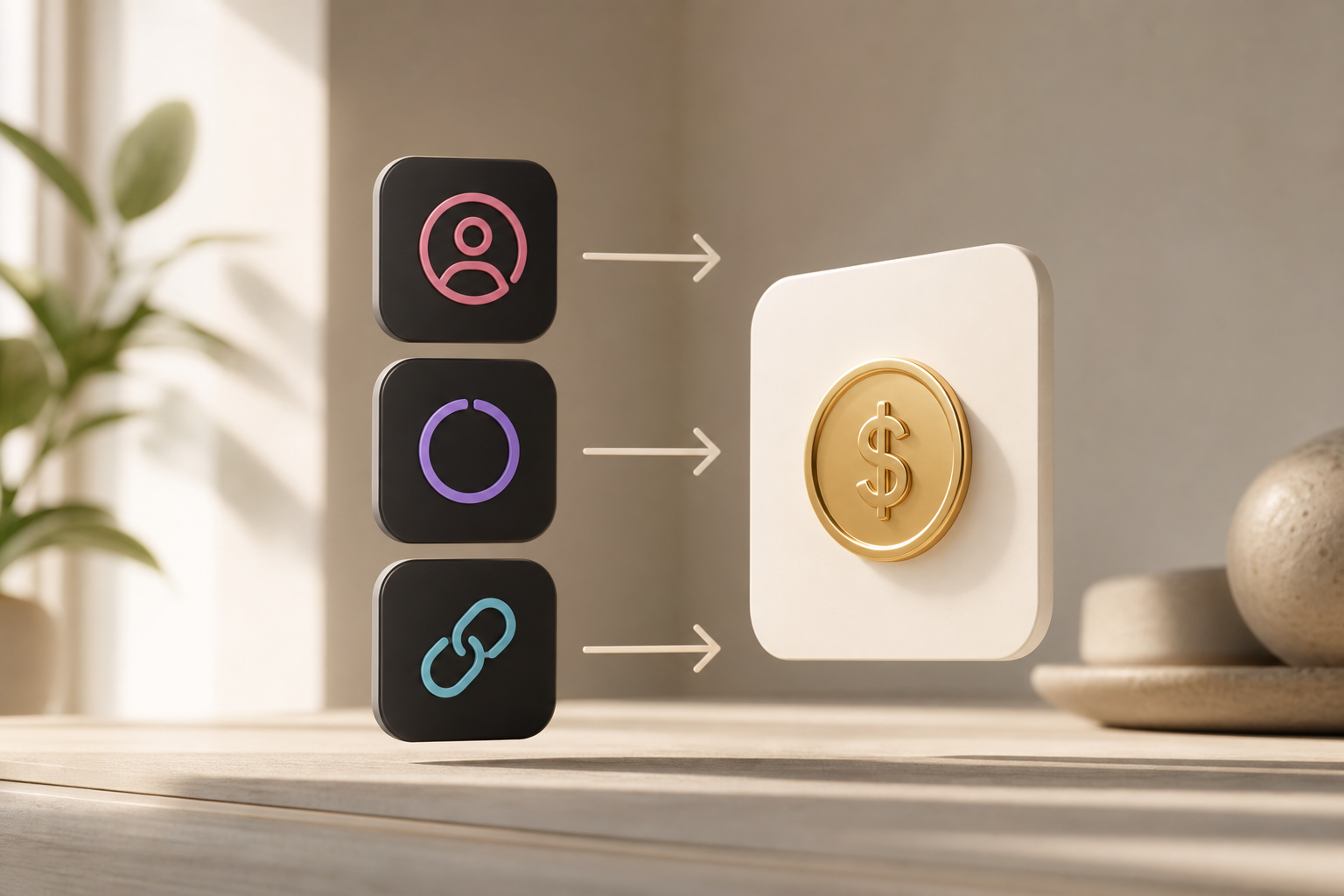
The retention-to-revenue pipeline
- Hook holds attention (target: hold past 1.0–1.
- Body delivers value (target: average watch 35–65% depending on length)
- CTA drives link click or DM (target: measurable click-through or DM rate)
- Commission earned (target: breakeven CPA or better within 2–4 test cycles)
In short, treat the first 1.5 seconds as the turnstile to your entire commission path. This is why you’ll run short-form video hook testing on every offer, not once, but as an ongoing system in 2026.
A 5-Step Framework for Testing Video Hooks Systematically
short-form video hook testing only works if you isolate the variable and respect data windows. Follow this process and you’ll know which openers truly earn attention and revenue.
Step 1: Lock one offer and one “body + CTA”
Pick a single affiliate offer for this test cycle. Film one “body + CTA” segment (the part after the hook) that you will use for every variation. Keep the body tight: 8–20 seconds with one proof point (demo, before/after, or fast testimonial), then a clear CTA (bio link, “comment KEYWORD for the link,” or “DM me HOOKWORD”).
- Keep lighting, framing, and audio consistent.
- Script the CTA so the ask is identical across all versions.
- Add your on-screen text in the body, not in the hook, to avoid variable creep.
Step 2: Write 5–8 hook variations with different triggers
Hooks must be under 2 seconds. Write and storyboard 5–8 variants using different psychology triggers. Example product: a fitness supplement that reduces post‑workout soreness.
- Curiosity gap: “This fixes ‘can’t-walk’ leg day…”
- Controversy: “Stop icing after workouts. Do this instead.
- Social proof: “12,438 runners swear by this before hills.
- Direct benefit: “Recover 30% faster after squats.
- Pattern interrupt: (Snap a resistance band) “Wait—before you stretch…”
- Question: “Ever regret leg day by Tuesday?
Record each as a single, sharp open line plus a visual cue (gesture, prop, or on-screen text). Keep the first shot stable and bright.
Step 3: Record each hook onto the identical body segment
Film the hook as its own clip. Then attach it to the exact same body+CTA edit. Do not change music, captions, color grade, or b‑roll. The only change should be the first 1–2 seconds.
- Total video length: 12–25 seconds is a solid range for affiliate tests.
- Add on-screen text only if you will keep it identical across all versions.
Step 4: Post variations in a clean test environment
Isolate the variable. Either post to separate warmed accounts on the same day, or stagger on one account 48 hours apart. Do not stack tests within 24 hours on one profile if you want clean readouts.
- Separate accounts: same time of day, same hashtags, same geo.
- Single account: post one variation every 48 hours to reduce crossover effects.
- Avoid boosting with paid spend during the test window.
For the principle behind this, see controlled split testing basics: A/B testing.
Step 5: Measure after 48–72 hours — prioritize signal, not vanity
After 48–72 hours, read three metrics in this order:
- 1-second retention rate (how many stayed past the first second)
- Average watch time as a percentage of the video
- Link-in-bio click rate or comment-to-DM conversion rate
Views alone are vanity. Retention percentage and downstream clicks are how you pick a winner. If two hooks tie on retention, pick the one with higher downstream clicks.
Copy this table to track your run:
| Hook Type | Retention at 1s | Avg Watch % | Link Clicks |
|---|---|---|---|
| Curiosity gap | |||
| Controversy | |||
| Social proof | |||
| Direct benefit | |||
| Pattern interrupt | |||
| Question |
Finally, keep your expectations sober. Two or three hooks will underperform. One might bomb. That is the point. You’re paying a small test tax to find the opener that lets your product proof get seen.
Also Read!
Best Video Hook Testing for Affiliate Marketers in 2026
Social Reel Farm vs TokUpgrade for Affiliate Marketers: Which Is Better for TikTok Account Warm-Up?
5 Hook Testing Mistakes That Kill Affiliate Conversions
You’re not a “content creator.” You’re a performance marketer with a camera. That mindset helps you avoid these affiliate‑specific errors in short-form video hook testing.
Mistake 1: Testing on a cold account
A new or dormant account has no baseline engagement and weak category signals. Your data will swing wildly.
- Fix: Warm the profile for 10–14 days with consistent posting and normal engagement before running tests.
Mistake 2: Changing hook and body at the same time
If you tweak the demo, swap music, and rewrite the hook, you learn nothing about the hook.
- Fix: Change one variable per test cycle — the hook — and keep the body+CTA identical.
Mistake 3: Judging by views instead of retention curve shape
A video can hit 10,000 views yet lose 70% of viewers by second two. That means the algorithm tried distribution but saw early exits.
- Fix: Rank by 1‑second retention first, then average watch percentage, then link clicks. A version with 3,000 views and 55% past 50% watch is the keeper.
Mistake 4: Repeating one hook type
Relying only on POV or trend hooks hides other angles that might fit your buyer better.
- Fix: Test across trigger categories in every cycle: curiosity, controversy, social proof, benefit, pattern interrupt, and question.
Mistake 5: Scaling a “winner” after one lucky spike
One fluke post doesn’t prove repeatability.
- Fix: Validate the winning hook over at least 3 posts or 2 warmed accounts before scaling to your full network.
“Once we ranked hooks by 1‑second retention instead of views, our good ideas stopped losing to loud trends.” — An affiliate lead we trained in Q1 2026
Tools and Resources for Scaling Your Hook Tests
You can run short-form video hook testing with free tools or set up a full test rig. Pick based on your scale, not hype.
Category 1 — Analytics
Use the platform’s analytics first. TikTok’s native analytics show per‑video retention graphs and traffic sources. Instagram Insights for Reels offers reach, watch time, and audience data. For competitor research, tools like VidIQ or Pentos (mentioned by name only) can help you spot openers that hold attention in your niche. Start simple: read 1‑second retention and average watch percentage per variation after 48–72 hours.
Category 2 — Content creation
CapCut speeds up hook swaps and keeps your body+CTA edit locked. Canva helps you test first‑frame text overlays in a batch. ElevenLabs or similar voice tools can create alternate hook reads in the same voice, so you isolate words without changing tone or pace. Keep hooks under 2 seconds and export in the same format for every variant.
Category 3 — Multi-account testing infrastructure
Serious affiliates test across multiple accounts to reach statistically meaningful data faster.
- Run 2–3 accounts yourself on separate devices and IPs.
- Use scheduling tools like Later or Buffer to stagger posts 48 hours apart.
- Consider managed services if you don’t want the operational overhead.
Tools like Social Reel Farm are one option for hands‑off scale. The system operates 1,000+ manually managed mobile accounts run by real team members, uses structured account warm-up before campaigns, and runs systematic hook testing with data-led posting decisions. It also deploys on real devices (not bots) and supports formats such as Hook + Demo videos, UGC avatar generation, and slideshow videos. That social proof and real‑device deployment reduce risk when you need multi‑account distribution without breaking platform rules.
**See plans for multi-account testing → 1‑second retention rate
2) Average watch percentage
3) Link clicks or comment-to-DM conversions
Document the results in a spreadsheet with columns: date, account, hook type, first-frame text, 1s retention, avg watch %, clicks, and notes. Tag the top 2 hooks as “validated” and archive the rest. Next week, keep the winning hook styles and test two more variations against them. Over a month, your “swipe file” of proven openers will beat guesswork every time.
Key Takeaways
- Hook testing is a system, not a hunch: lock the body+CTA and change only the first 2 seconds.
- Rank winners by 1‑second retention, then average watch percentage, then link clicks — not views.
- Run 5–8 hook types per cycle to find angles your buyer will watch long enough to act on.
- Warm accounts and standardize settings to keep data clean and repeatable.
- Scale with tools and, if needed, managed multi‑account deployment to reach significance faster.