
 Post by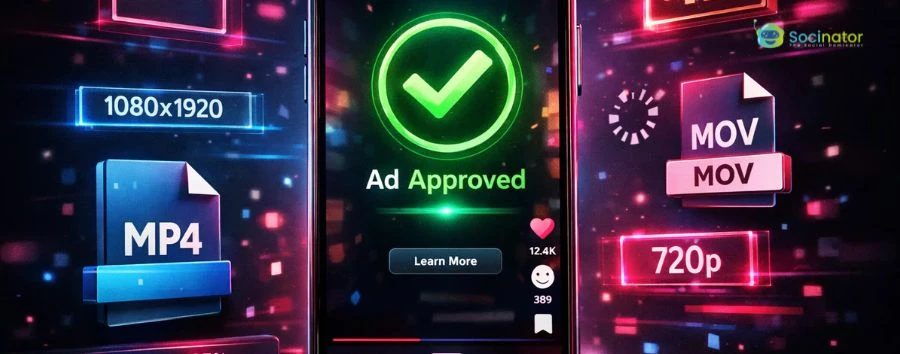
Running ads without understanding the right TikTok ad specs is one of the most common and most costly mistakes brands make. Every rejection, every delayed approval, and every video that looks off inside the feed usually traces back to the same root cause: the technical requirements were not met from the start.
TikTok ad specs determine whether your creative even enters the platform’s review system, and from that point forward, they shape how your content looks, loads, and performs in front of real audiences. This is not about being overly technical; it is about protecting your budget and your creativity from avoidable mistakes.
This guide covers every critical spec you need, the formats that move through approval faster, and how to set your campaigns up so nothing gets in the way of performance.
Listen To The Podcast Now!
What Makes TikTok Ad Specs Different From Regular Video Requirements?
Most people treat their ad uploads the same way they handle organic posts, and that is where things go wrong. Organic videos on TikTok get a degree of flexibility that paid creatives simply do not.
When you run TikTok advertising, every file goes through an automated review layer that checks resolution, aspect ratio, file type, bitrate, and safe zone compliance before a human reviewer even looks at it.
A slightly compressed video might play just fine on a personal profile. That same file submitted as an ad can get flagged, delayed, or rejected during upload. Understanding TikTok ad specs before production, not after, removes that friction entirely.
The technical requirements are not bureaucratic hurdles. They are the blueprint for content that loads fast, looks professional, and reaches the audience it was built for without interruption.
What Are the Core TikTok Ad Specs Every Advertiser Needs to Know?
For In-Feed Ads, the most widely used format, the TikTok ad specs are specific and non-negotiable. Here is the full breakdown:
- Aspect Ratio: 9:16 recommended; 1:1 and 16:9 are supported but consistently underperform
- Resolution: Minimum 540×960px; 1080×1920px is strongly recommended for clarity
- File Size: Maximum 500 MB
- File Types: .mp4, .mov, .mpeg, .3gp, .avi
- Video Length: 5 to 60 seconds; 9–15 seconds is the performance sweet spot
- Bitrate: At least 516 kbps
- Ad Description: 12–100 Latin characters; no emojis, no hashtags, no special characters like { }
These are gates, not guidelines. Missing even one of them can delay your approval or trigger an outright rejection.
The 9:16 vertical format is particularly critical; it is the native viewing experience users expect, and anything else immediately signals that the content was not built for the platform.
Does Video Length Really Affect How Fast Your Ad Gets Approved?
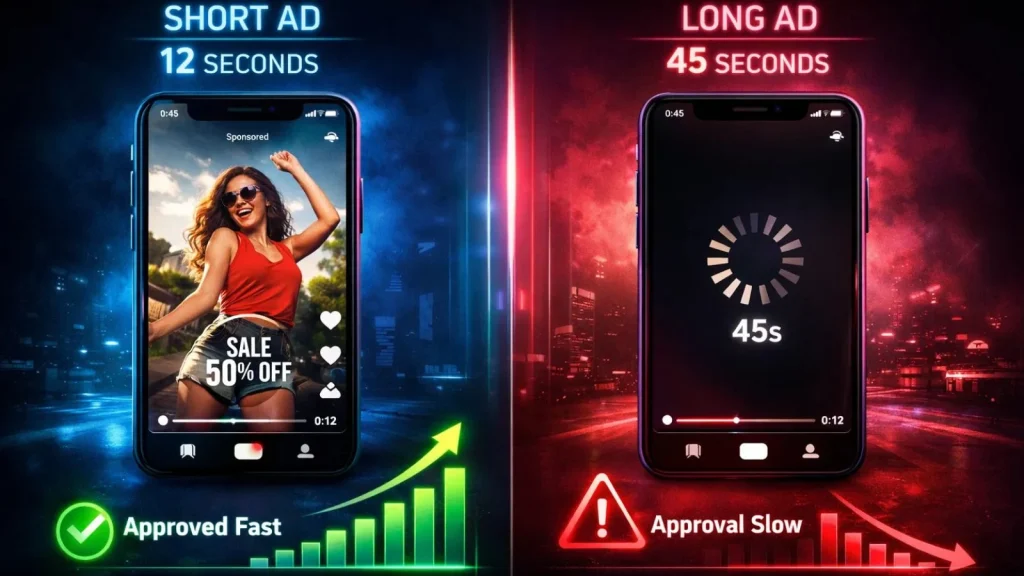
Technically, TikTok supports video lengths from 5 seconds up to 10 minutes across different ad formats. But the TikTok ad specs that matter most for performance consistently point toward a much shorter window.
The platform’s own guidance highlights 9 to 15 seconds as the optimal duration for In-Feed Ads, and the approval process reflects this preference.
Shorter videos are processed faster. They contain fewer elements that might trigger content flags and are less likely to require manual review. Beyond the approval queue, shorter ads perform better once live because they align with how people actually scroll through TikTok. The completion rate on a 12-second video will almost always outperform a 45-second version aimed at the same audience.
Longer formats still have their place. TopView ads support up to 60 seconds for immersive storytelling, and some formats go up to 10 minutes. But if approval speed is the priority, keep it short and front-load everything that matters.
Are the Specs Different Depending on Which Ad Format You Use?
They are, and this is where campaigns run into real trouble. Not all TikTok ad specs are universal. Each placement operates under its own technical rules, and treating them the same is a common and expensive oversight.
1. Brand Takeover Ads appear the instant a user opens the app. These require a minimum resolution of 720×1280px, a strict 9:16 aspect ratio, and a video length capped between 3 and 5 seconds. They are short by design, built for immediate brand recognition, not storytelling.
2. TopView Ads follow a different structure. They transition from a full-screen takeover into an in-feed experience and require a minimum bitrate of 2,500 kbps, significantly higher than standard In-Feed requirements, to maintain quality through both phases.
3. Spark Ads, which let you boost an existing organic post, carry almost no technical restrictions since TikTok pulls directly from the original content. The creative’s native format is preserved throughout.
What Is the Safe Zone Rule and Why Does It Matter for Your Ads?
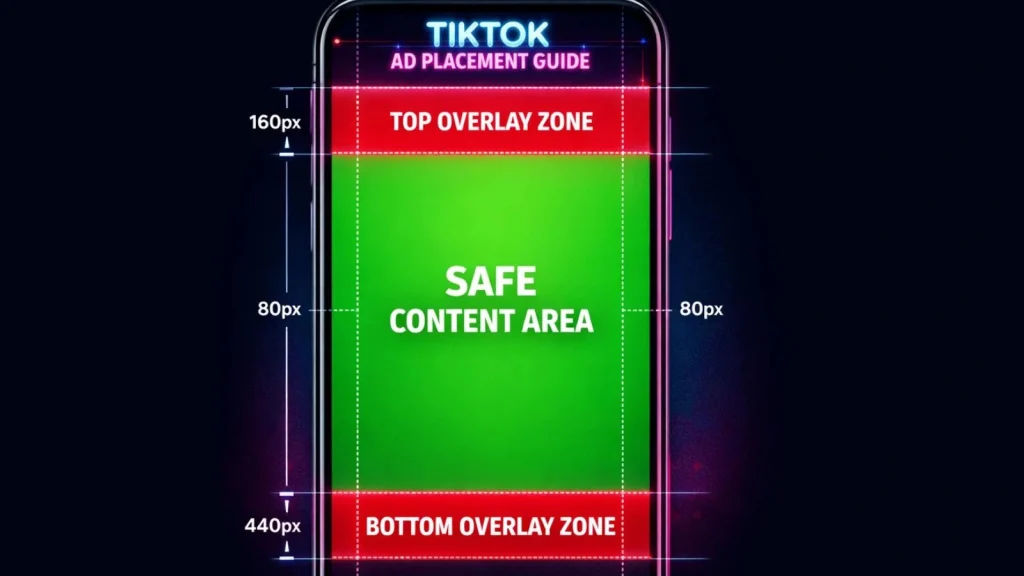
Safe zones are one of the most overlooked aspects of TikTok ad specs, and skipping them is a reliable way to undermine an otherwise well-built creative. TikTok’s interface places UI elements, profile names, CTA buttons, captions, and engagement icons directly over the video frame. If your key visuals, brand text, or call to action land in those overlay areas, they will be partially or fully hidden when the ad runs.
The general rule: keep all critical content in the central portion of the screen, avoid the top 160px and the bottom 440px, and maintain at least 80px side margins on both edges. Watermarks from other platforms are also not allowed; TikTok’s review system flags them reliably.
Getting the safe zone right does not necessarily speed up approval, but ignoring it directly hurts performance. Every impression where the CTA is cut off, or the brand name is hidden, is wasted spend.
Is There a TikTok Content Format That Performs Better in Both Approval and the Feed?
The TikTok content format that clears review fastest looks and feels native to the platform. TikTok’s review system, automated and human, flags content that feels out of place: horizontal footage forced into a vertical frame, heavy watermarks from competitor platforms, excessive text overlays, or production styles that look more like broadcast television than a real TikTok post.
The viral TikTok video format works for paid campaigns precisely because it does not signal “ad” within the first second.
Shot vertically, built around a strong opening hook, with clean audio and minimal but purposeful on-screen text, this combination moves through the review queue cleanly and performs better once live.
TikTok’s system rewards ads that hold attention, and the platform consistently gives better reach to content that behaves the way organic content does, rather than content clearly constructed for traditional media placements.
Can Social Reel Farm Help You Build TikTok Ads That Actually Scale?
For brands that want their content to meet every TikTok ad specs requirement and perform well after approval, Social Reel Farm is a structured, human-operated growth system built specifically for short-form platforms.
Here is what sets it apart:
- 1,000+ manually managed mobile accounts, each operated by a real team member on a dedicated physical device, no bots, no automation
- Structured hook testing, the first 2–3 seconds are tested and itera.ted until view retention is consistent across the account network
- Data-led posting decisions, content goes live when engagement signals say so, not on a fixed schedule.e
- Simultaneous TikTok and Instagram management within one coordinated operation
- Content validation before scalig , only formats that prove performance get deployed at scale
- Zero artificial engagement, no purchased followers, no inflated metrics, ever
For brands that need real distribution backed by real data, Social Reel Farm is built exactly for that kind of operation.
Know the Specs. Then Make the Content Work Harder Than the Rules:
Getting TikTok ad specs right is not a creative decision; it is the entry fee. Once the technical side is locked, everything else is about content that earns attention in the first two seconds, holds it, and converts. Brands that combine clean spec compliance with a structured distribution strategy do not just get approved faster; they build campaigns that compound over time. The specs get you in the door. The content keeps you in the room.
FAQ’s:
Q1: What is the best resolution for TikTok ads?
Ans: 1080×1920px is the recommended resolution. The minimum accepted is 540×960px, but higher resolutions consistently deliver sharper visuals and better results inside the feed.
Q2: Do all TikTok ad specs apply to Spark Ads?
Ans: No. Spark Ads inherit the original post’s settings and carry almost no technical restrictions on resolution, file type, or file size.
Q3: What file type works best across all TikTok ad specs?
Ans: .mp4 is the most reliable choice. It delivers strong quality at manageable file sizes and is compatible with every ad format TikTok currently supports.
Q4: Does video length impact TikTok ad approval speed?
Ans: Shorter videos process faster. Keeping your ad between 9 and 15 seconds reduces the chance of content flags and tends to move through review more efficiently than longer formats.