
 Post by
**Get expert hook tests done today →
Your course promo isn’t failing because the lesson is weak. It’s failing because the first second is boring. Short-form video hook testing fixes that by forcing you to try multiple openings and choose the one that keeps people watching. In 2026, the fastest way to grow course sales on TikTok and Instagram is to test openings like you test headlines.
Here’s the answer up front: hook testing means you create several alternate first lines or visuals for the same video, publish each under controlled conditions, and compare early retention. Because TikTok and Reels decide reach based on what happens in the first 1–3 seconds, your opening line, gesture, and on-screen text do most of the work. If you only post one version, you’re guessing.
The first seconds decide reach
As an example, a fitness coach records a great 22-second reel about fixing squat depth. They post it once. It gets 200 views. They assume the topic is bad.
Meanwhile, another coach films the same body content but tries five openings. One version doubles the average watch time and drives profile taps. The difference wasn’t the tip, it was the first sentence and frame.
By the way, this isn’t a new idea. It’s A/B testing applied to video starts, not landing pages. If you need a primer on controlled experiments, read this quick explainer: A/B testing (Wikipedia).
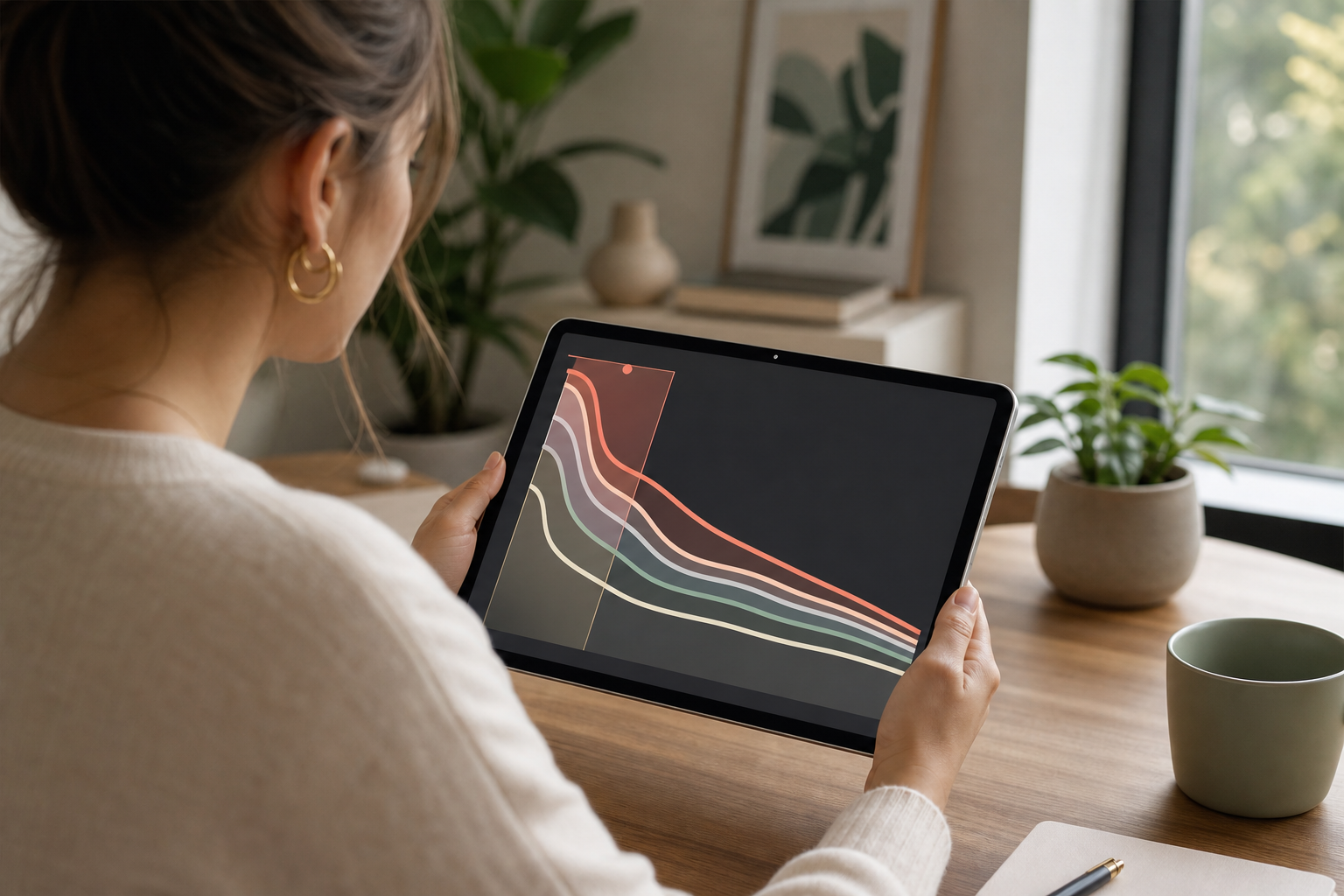
Why Your Course Promo Videos Die in the First Second (And What Hook Testing Actually Solves)
On TikTok and Instagram Reels, distribution begins with a tiny test batch. If those viewers bail at the start, your video stalls. If they stay through the first beat, the platforms try a bigger batch. That’s why course promos “die in the first second.
Specifically, early-second retention and watch-through shape distribution. TikTok’s analytics expose an audience retention curve, and creators use it to judge the opening drop. Instagram Reels shows watch time and completions, which you can pair with timing and comments to infer if the intro held attention. Either way, the first frame and first sentence decide if the algorithm expands your reach or not.
Here’s what hook testing solves for course creators. You often target a niche promise, “Build a Notion second brain,” “Lose 10 pounds safely,” or “Learn Figma fast.” Your core lesson is fine, but the cold audience won’t stick around unless the open is clear, novel, or high-stakes. Testing five to eight openings on the exact same body video isolates the intro as the only variable. Then you compare early retention, average watch percentage, and profile taps per view to find the winner.
For example, a design instructor posts one reel with “3 Figma shortcuts you need.” It flops. The same body with “Your Figma file is slow because of this” opens stronger and triples profile visits per 1,000 views. The content didn’t change. The hook did.
- Problem: You post one version, get 200 views, and assume the topic failed.
- Fix: You test five openings, find one that doubles average watch time, and scale that pattern across platforms.
“Treat the first three seconds like a paid headline test. The rest of the video is the landing page.”
Why this matters for courses
Your sale starts with attention; without it, you won’t get the click, email, or enrollment. And hook testing isn’t extra work you bolt on later, it’s the highest-return edit you can make on a 20–30 second clip, because the opening determines whether the rest even gets seen.
Also Read!
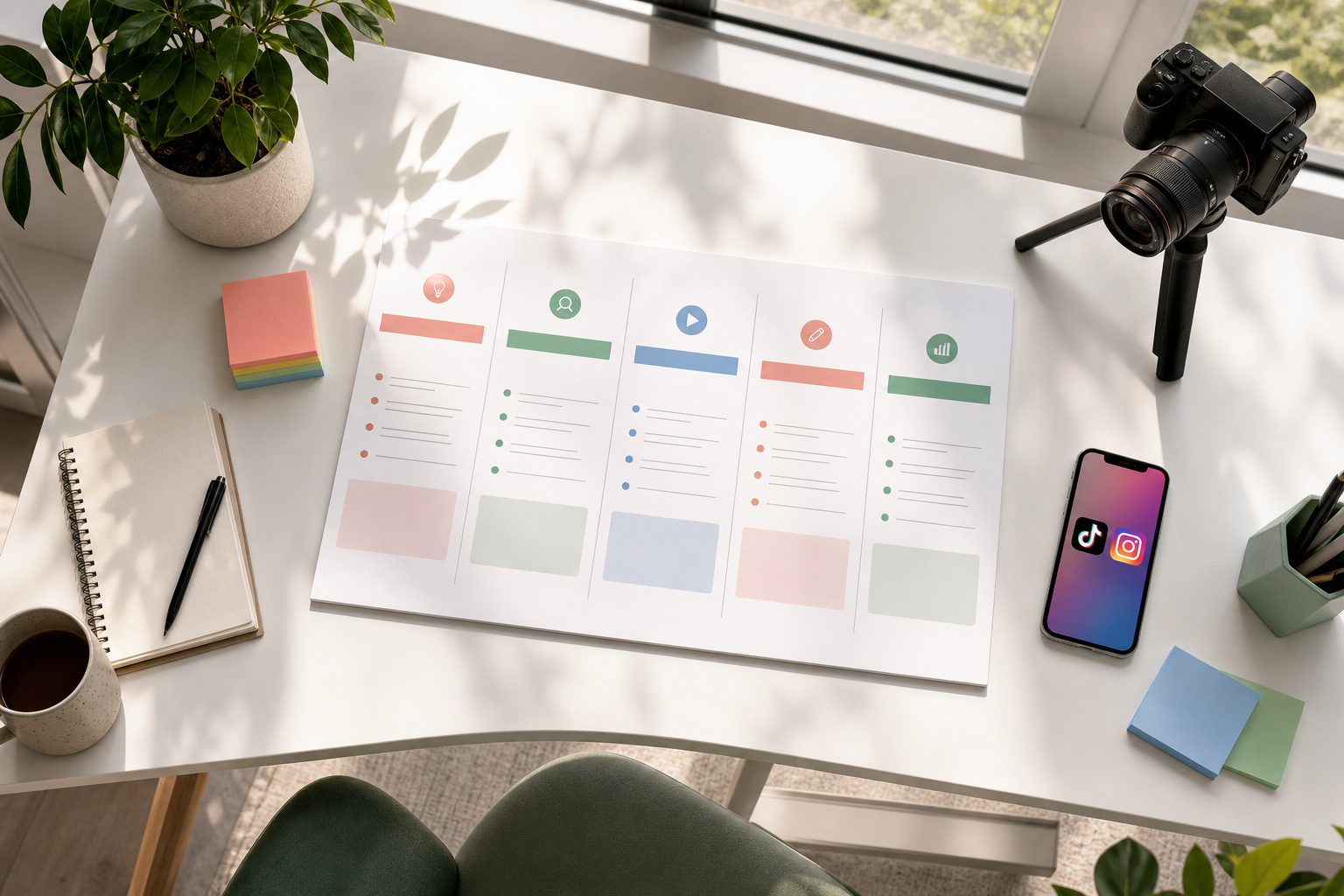
The 6-Step Hook Testing Framework for Course Creators
You don’t need a studio or a huge team. You need one solid body video and a repeatable way to test openings. Here’s the framework I use with creators in productivity, fitness, and design.
Opening Lines That Work
Step 1: Choose one core video
- Pick one strong body video: a lesson teaser, a before/after, or an objection-buster.
- Keep the body identical in every test. Only the first 2–4 seconds vary.
Step 2: Write 5–8 opening variations using proven archetypes
-
Contrarian statement: “To-do lists make you slower. – Curiosity gap: “This Notion toggle hides your real problem. – Bold claim with proof: “I cut email time by 62% with one template.
-
“Don’t do X until you Y”: “Don’t start a new habit until you track this. – Direct question: “Why does your weekly review still take an hour? – Before/after promise: “From 19 tabs to inbox zero in 9 minutes.
For a Notion productivity course, rewrite them like this:
-
“Your second brain is leaking tasks. – “The Notion template that fixed my Sundays. – “I planned a week in 7 minutes. Watch.
-
“Don’t add tags until you name this. – “What do you forget every Friday? – “From chaos to clear — one change.
Step 3: Film or edit each opening onto the same body
- Record quick intro lines back-to-back. Keep each under 4 seconds.
- In CapCut, stack your body clip and swap the first shot and on-screen text.
- In Descript, test text overlays and captions without re-exporting the whole piece.
Step 4: Post each variation under controlled conditions
- Publish one version per day around the same local time window.
- Use the same caption CTA and hashtags. Change only the opening.
- If you can, post to separate warmed accounts to reduce cross-video cannibalization.
Step 5: Compare results after 48 hours
- Early drop proxy: Check the retention curve at the 1–3 second mark (or your nearest early datapoint).
- Average watch time percentage: Higher beats prettier thumbnails — judge on watch, not views.
- Profile visits per view: Track how many tapped through to your profile per 100 views.
Winning signals
- Your early retention line shows the smallest initial drop against the other variants.
- Your average watch percentage lands in your top three videos this month.
- Your profile visits per view beat your 30-day median by a clear margin.
Step 6: Scale the winner
- Post the winning opening to extra platforms and accounts.
- Run it as your first paid creative if you buy traffic.
- Reuse the opening pattern on your next 10 videos. Then test again.
For the testing mindset, this is classic controlled experimentation, change one thing, hold the rest steady, and review clear outcome metrics. If you want a quick refresher on the principle, here’s a clean primer: A/B testing (Wikipedia).

Posting Windows and Controls
Match your posting time-of-day across variants to reduce noise from audience routines. Keep captions, hashtags, and music identical so the opening remains the only variable. Also watch for holidays, launches, or odd spikes and avoid testing during those windows so you don’t pollute your read.
How to Read Your Data
Favor percentage metrics over totals to minimize timing bias. Look for agreement across indicators, early retention and average watch should both point to the same winner. Screenshot graphs and log results so you can compare patterns later instead of relying on memory.
“Once one opening wins twice in a row on both early retention and average watch, promote that pattern to your default.”
For more examples of real-world testing setups beyond courses, scan this practical agency guide on hook testing. You’ll see how teams structure tests before scaling content across dozens of accounts.
5 Hook Testing Mistakes Course Creators Make (and How to Avoid Them)
You sell ideas, not snacks. That changes how you test. Here are the traps I see with info-products and online courses.
Mistake 1: Testing on a cold or dormant account
New or inactive accounts often get throttled reach and uneven distribution, which makes test results noisy. Warm the account for 2–3 weeks with daily posts to establish a baseline and stabilize your audience. This simple warm-up raises baseline exposure so comparisons are less random and more repeatable.
Mistake 2: Changing the body content with the opening
If you tweak the middle while you swap the intro, you’ve contaminated the test and won’t know what actually drove the change. Lock your body clip and alter only the first line and first frame so the opening remains the sole variable.
Mistake 3: Judging by total views instead of watch percentage
A post can rack up views because of timing yet still lose on retention, leading you to scale the wrong idea. Normalize with percentage metrics and the retention curve, not raw views, so you reward true attention rather than lucky distribution.
Mistake 4: Testing one archetype over and over
Curiosity gaps won’t always win in fitness, and bold proof won’t always win in productivity. Rotate archetypes, contrarian, question, “don’t X until Y,” micro-proof, and before/after, so you learn what your niche actually responds to.
Mistake 5: Never scaling the winner
Endless testing without rollout kills momentum and misses compounding reach. Once one opening wins in back-to-back tests and leads on early retention and average watch, ship it at volume, then start a fresh round with a new body clip.
A Simple Decision Rule
- Run at least three variations per body clip.
- If one opening wins twice in a row across your key percentage metrics, stop the test and scale.
- If no clear winner emerges, write three new openings from different archetypes and re-test.
What Changes by Niche
In fitness, direct “don’t do X” and bold proof lines tend to pull viewers in fast. Productivity content benefits from concrete gains such as “7 minutes” or “one template” instead of vague benefits.
Also Read!
Best AI UGC Video Creation for Course Creators in 2026
How to Test Video Hooks for Your Ecommerce Brand (Step-by-Step)
Tools and Resources for Systematic Hook Testing
You can run this with only native analytics and a spreadsheet. Tools help, but discipline wins. Here’s the stack I recommend.
DIY Analytics: Where to Find the Right Metrics
TikTok (creator or business account)
Open your post and tap the three dots, then Analytics. In Audience retention, read the early drop around the 1–3 second point to judge hook strength. Note Average watch time and the Watched full video rate as supporting metrics.
Instagram Reels (professional account)
Open your reel and tap View insights. Use Average watch time, Watch time, and Plays together with Profile visits to judge interest and downstream action. Because Reels doesn’t expose a 1–3 second datapoint, treat average watch time and completions as your early-interest proxy and pair findings with timing notes.
Spreadsheet tracking
Set up columns for Opening archetype, Opening text, Post date/time, Platform, Average watch %, an Early retention note with a screenshot link, Profile visits, Link clicks, and any Comments that mention the opening. Track your 30-day median so you judge winners by percentage benchmarks, not mood.
Editing and Variant Creation
Use CapCut to swap first clips fast while keeping captions and music consistent across versions. In Descript, iterate on on-screen text and tighten first-second pauses, then export matched variants without redoing the whole edit.
Multi-Account Testing and Paid Analytics
If you need faster, more reliable signals, multi-account testing helps. Tools like Social Reel Farm run systematic hook tests across 1,000+ manually managed mobile accounts operated by real team members, with structured account warm-up, zero artificial engagement, and data-led posting decisions. That social proof and human approach matter when your goal is course enrollments, not vanity views.
For deeper cross-platform tracking, paid tools like Analisa.io or Pentos can help you spot patterns in opening lines and retention across markets. Use them to augment, not replace, your native analytics.
“We don’t ship campaigns cold. We warm accounts, test openings, then scale the winners. It’s a human-run system, not bots.” — Social Reel Farm (authority and process)
**See pricing and test plans →
DIY vs Managed
DIY gives you full control and zero extra cost, but test cycles tend to be slower. Managed testing reads results faster across more accounts, surfaces clearer winners, and trades speed for higher upfront spend. A hybrid split works well: you write and film, while a service handles warm-up, posting, and measurement.
For an example of how managed testing compares with another vendor’s approach, this plain-English breakdown is useful: comparison with Viral Launch Hooks.
What to Do This Week: Your First Hook Test in 5 Days
You can run your first test in five days. Keep it light and precise.
Day 1.
- Choose your best promo or your most important lesson teaser.
- Write five new openings using the archetypes above. Keep each under four seconds.
Day 2.
- Batch-record the five lines back-to-back in the same outfit and setting.
- In CapCut or Descript, swap the first clip and on-screen text only. Lock the rest.
Day 3–4.
- Post one variant per day at the same time window.
- Log average watch %, grab a screenshot of your early retention curve (or note an early-interest proxy on Reels), and record profile visits per view.
Day 5.
- Pick the opening that leads on early retention and average watch and drives the most profile visits per view.
- Post the winner to an extra platform or warmed account. Then write three new openings for your next body video.
Moreover, one real round of testing will teach you more about your audience than a month of random posts. As a result, your intuition sharpens, and you’ll write stronger openings on the first try.
Key Takeaways
- Early attention decides reach. Your opening line and frame do most of the work.
- Test 5–8 openings on the same body clip, post under matched conditions, and judge by percentage metrics.
- Screenshots and a simple sheet beat guesswork. Keep a log and compare against your 30-day median.
- Scale winners fast, then repeat. Treat this as a weekly habit, not a one-time fix.
This week, run the five-day plan above with one body video. Then, take the winning opening and reuse its pattern on your next ten clips. If you want help warming accounts and speeding up tests with human-run posting across 1,000+ devices, get in touch.